Cavendish Crematorium

16 06 2010

The Silken Hotel wasn’t open yet. We were standing there at the hoarding, Silent Motion and I, with that jelly of a man in his yellow vest pointing his finger accusingly, shaking with rage in a kind of mild convulsion, the orbed camera behind him spinning around and zooming in on our faces, like an eyeball rolling back in a head, making the convulsion a complete yet disembodied visceral experience for this lamentably flabby being.

The sergeant arrived, blue lights painting the walls, tires screeching. He almost rolled out of his car “UrbEx huh? Yeah, we get your kind around here sometimes. Tell you what, see that boarded up building across the street there? Let’s see if you can get into that one!” We meekly accepted the challenge as they frantically tried to fix the zip ties on the Heras fencing we had snapped off in our aborted miniature vertical scramble.

Challenge Issued

Across the street, we found that this building, Cavendish House it was called, was boarded up exceptionally well, stone gargoyles on patrol in moody up-lighting, three stone Furies screaming insults at us as we hung from ledges over the road, tugging on widows.

Stoney stares

Furies

With a pop, a seal on one gave and Silent Motion swung it parallel to the floor. We dove through headfirst and when the window closed with a sharp bang, we were surrounded by silence. I crawled to the dirty pane on the other side of the room and peeked across the road. The sergeant was there, his belly still threatening to rip his utility vest in two. He was smiling, staring at the building and smiling. Creepy fuck.

Popped

Marauder

The exploration proceeded as we opened doors and windows for the next team of rogue adventurers, torches moving around like little bugs on walls looking for a hole to hide in. Silent motion found a generator running and hooked up to a small TV. He powered it up and we spent an hour watching an old Bollywood classic, a brief respite from the endless stairs. Room after room of blue and orange light comforted us behind the boarded up first floor. Unlikely to see, impossible to catch, invincibility ensued. Down or up? Up.

Dance music invoked

Creepy

The top of the first building (indeed we now realized there were three of these concrete monoliths, these plywooded Thatcherite government lumps of cement) had a roof that sat level with some office blocks. I peeked in the clean windows across, imaging the illicit affairs in office chairs that took place during our work hours, suits humping secretaries and capitalism. A blue church to our left looked like a plastic Disneyland air-filled jump house, replete with nostalgia for the abbey it was until Henry VIII seized it and ravaged it like a conquered Irish queen in the 16th Century.

Little things

Pink

The millennium eye approached us on the other side, that little monument we all love and love to say we hate. “Ride on that thing? Never!” Its millennium glow bounced off of the Thames, offering no apologies for its slow creep our direction. We did handstands, climbed radio antennae, pulled ourselves around in monkeyed feats of post-adolescent strength. We lost track of time. We didn’t care. Damn the horror of the night buses, we’ll ride ‘em!

The Furies descent

Eye

The lustful runs across the roof deteriorated eventually into a pink sky, and we knew that the time for morning coffee and a long walk to Elephant and Castle would soon be upon us. Time to go down. And down. And down. The building suddenly became distinctly subterranean.

Nuances of texture

It was wet here. It stunk like old dog, soaked in a summer-time sprinkler and shaking all over the children who uniquely appreciated the horrible musky shower, full of love. The empty corridors offered room for thought and made my stomach tense up, knot and twist, crying foul at the late (early?) hour. One turn revealed a large room with a safe, a thick door with twisty dials and an unsettling echo. We spun the lock, robbing the history from the place.

Sort of safe

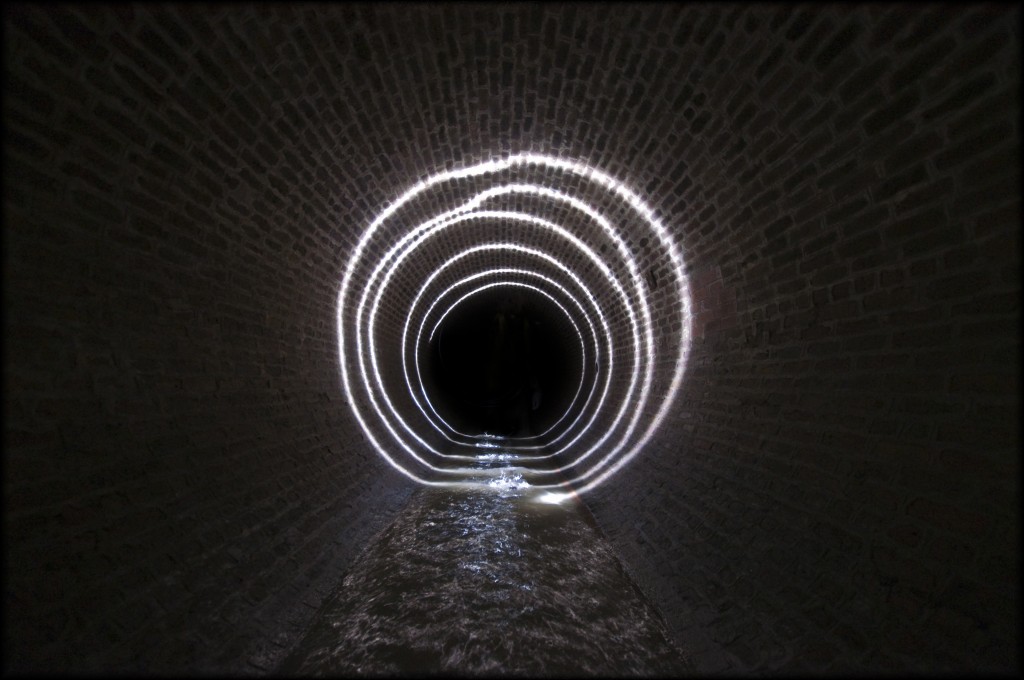
The watery passage continued until we could stand it no longer, blistering feet soaking in the liquid filth. We went for the ProEx shot to cap off the night, twisted and intoxicated, drunk on our own success at pissing on every wall in this building. Lighting was essential, we decided, draining camera batteries and making film strips roll back on themselves in our multiple attempts to get it right.

Pr0 Shadows

Suddenly, the sharp slap of metal on tarmac stopped us cold. Voices. A quick retreat. How could it be, this UrbEx fortress infiltrated? The retreat continued into a side room where we sat, a gentle humming behind us. Suddenly, Silent Motion sprung up, hitting the hum with his torch and there is was – a meat grinder, working with no electricity to speak of, begging for fodder. I screamed a little, quickly covering my mouth to stifle the alarm, pride on the floor. The voices were closer now, finally clear enough to make out the distinct sound of someone saying “they’re over here.” I knew that voice.

Ground

We fled down the hallway once more, trying to keep the drips and splashes from reverberating, a considering how long the water ripples that announced our direction of departure would continue their hideous radial momentum. The smells of the place began to change as we moved. It smelled… like burning. When we found out why, it was already too late. The swollen bellied sergeant and the jelly-man sidekick were on either side of us, laughing as we both stared in horror at the door to what looked to be a huge furnace.

Burned

“Welcome to Cavendish Crematorium!” The sergeant yelled, spit streaming from his plump pink lips. “The last stop for nosy UrbExers!” Next to me, Silent Motion sighed, staring into the murky water.


Blackwater London

30 05 2010

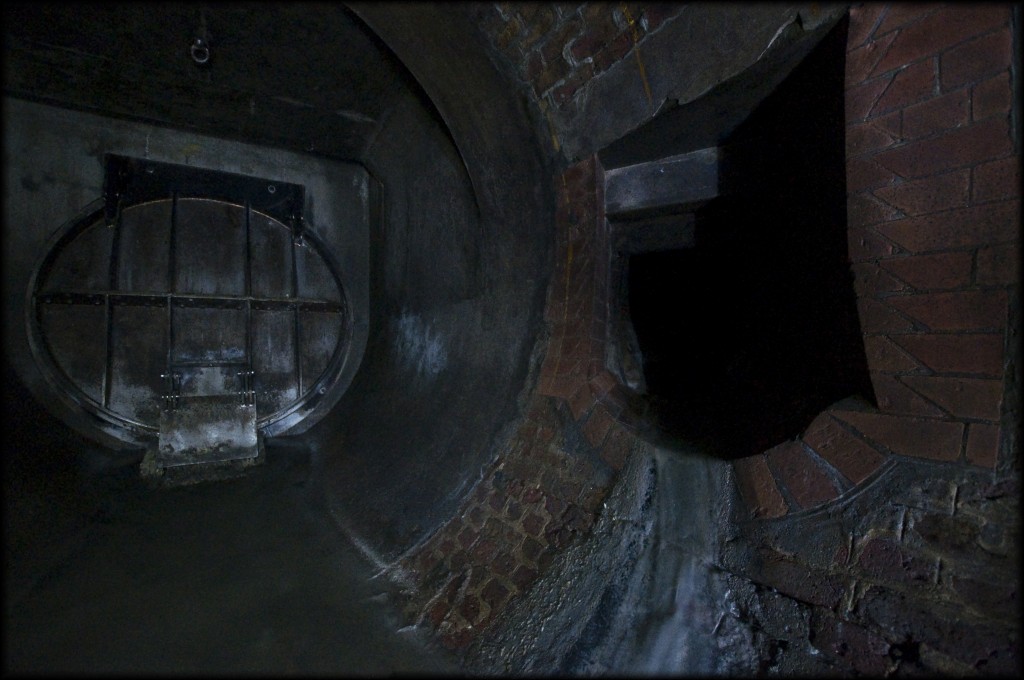
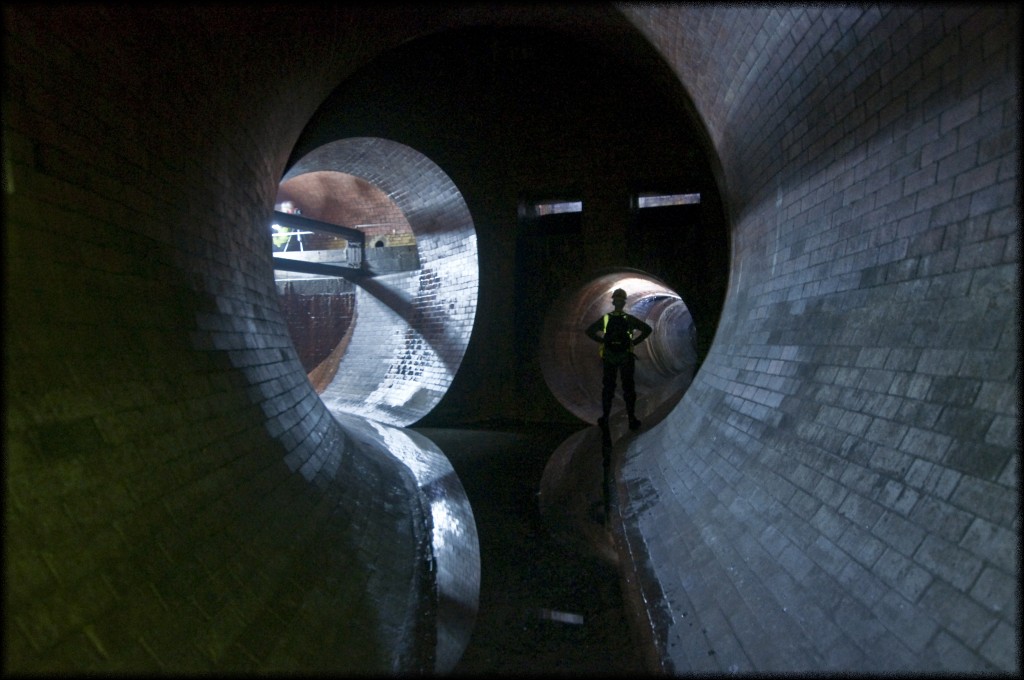
Sewers are perhaps the most enigmatic of urban infrastructures. Most citizens of modern cities are aware of their existence, yet few could accurately describe their layout or appearance.
–Matthew Gandy

Getting it right

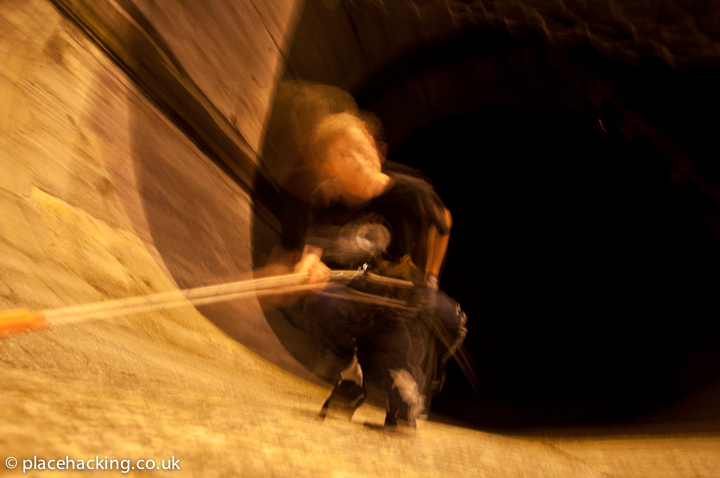
Above me, the heavy round metal doors into this underworld shake with a pinging metallic scream that reverbs down these watery tunnels, slowly fading into a seemingly endless succession of dull thuds that migrate down the street above us, some racing black cab speeding a jilted lover home from the pub after the last trains have stopped running. This overworld scenario interests me far more interpreted from below the undercarraige of the cab, little bits of shit-sticky mud dislodging themselves  from the freshly-pried manhole cover edges, plopping onto my bald head. Cue a shuddering shake, aural spell broken.

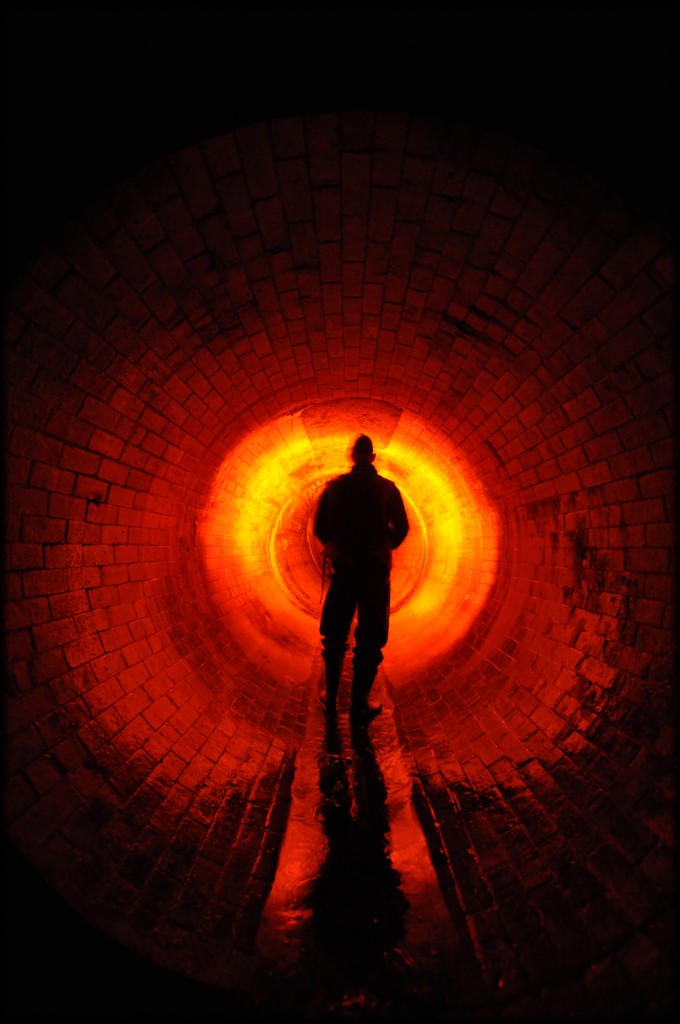
Water races around my feet faster than the cab, pinning my waders in a strange plastic comfort to my legs, little bits of used toilet paper and raw sewage which we lovingly call “the fresh” blocked by my PVC barrier, pushing around me angrily in an effort to make it down this old river and into the Thames like salmon swimming not toward their spawning ground but the river Styx where the boat will sink halfway across and they will float lazily to the bottom, never to move again. As drainers, we learn to love the waste just as we learn to love the trash left behind in the streets of London at 4am on a Friday night. It is the detritus of passion passion for life that staves off our impending deaths, as Michael Dibdin writes in Cosi Fan Tutti:

This place reeks of mortality.
I thought it reeked of rancid oil and bad drains.
It comes to the same thing in the end.

At some point in London’s Victorian Age, the separation between “river” and “sewer” became blurred. Technically, I am standing in the River Westbourne which no one but sewer workers and daring drainers have seen for a hundred and fifty years. Despite the fact that no one has drank the water from this river since the 1400s, it remains a vital waterway of this city, a throbbing vein of live humanness, rushing underneath our unknowing feet as we run to work on the pavement above. Seeing it is a reminder that, as Gay Hawkins writes, “our rituals of cleansing and disposal are enfolded with this landscape, our personal secrets are implicated in the public secret of sanitation.” This misadventure into the bureau of public secrets is the newest in our chain of London infiltrations, our most recent attempts to make sure that this city is documented from every possible angle through experience, fear and love. Just as I wouldn’t wipe the ass of somebody else’s baby, only London’s sewers interest me.

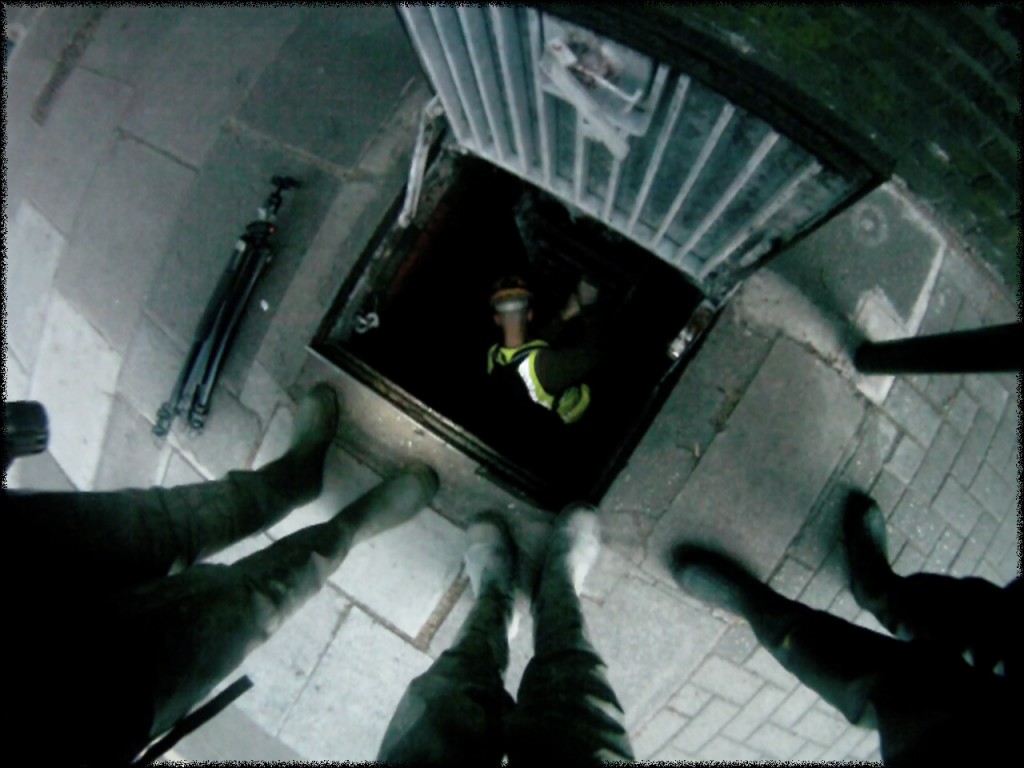
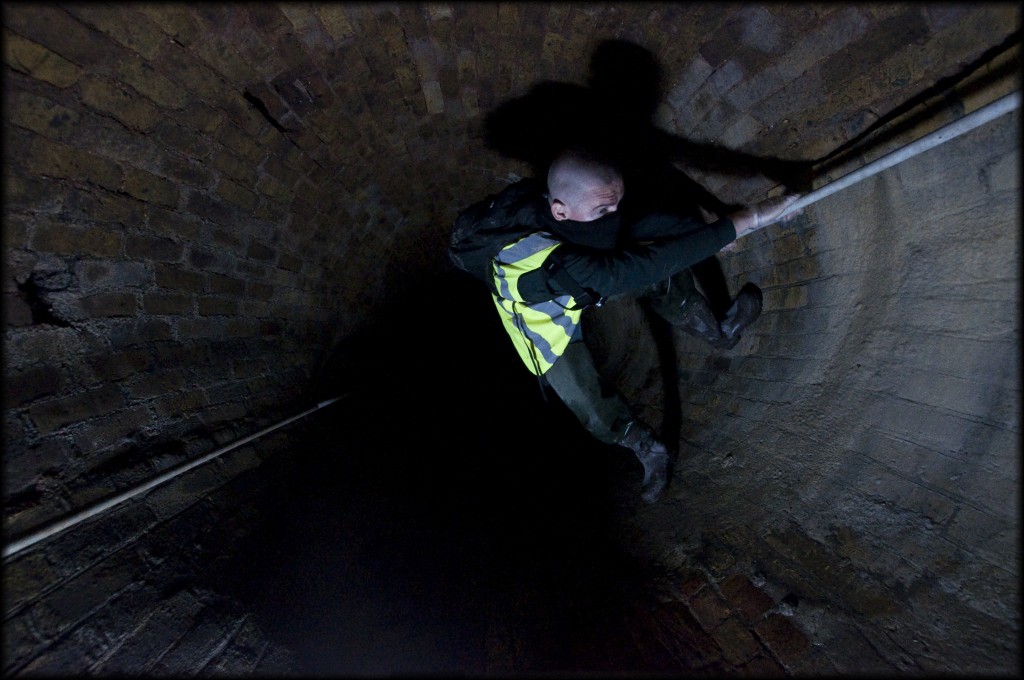
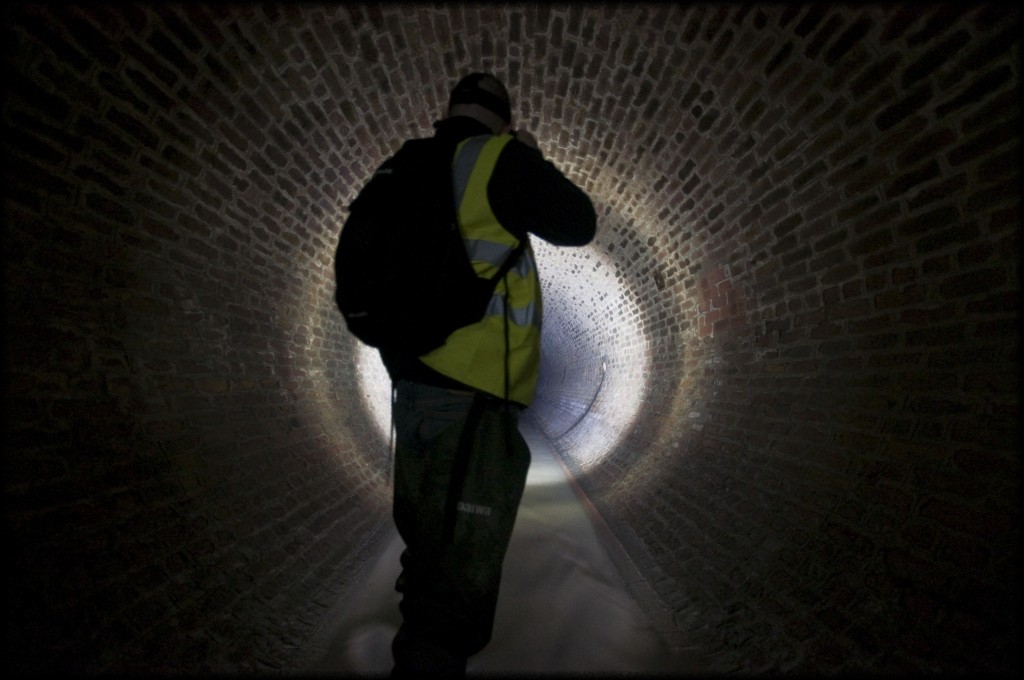
We view the stigma of what is flushes on these journeys both literally and socially. Our preferred mode of access to these hidden waterways is hiding in plain sight and the classism of London society works in our favour, with both police and the public ignoring everyone dressed in high-vis and a hard hat, benign foreign workers who make their living in places where no “respectable” Londoner would ever step foot. Our team of 4 digs into their toolbelts of large screwdriver, t-shaped keys and crowbars to break the seals into underdiscovered territory, finding what the city forgot existed, our brazen crew seemingly as hidden as this river when we actually look like we work for a living.

Cracked

Pull this bird

The addiction to infiltration does not lay in the adrenaline rush of the experience. Infiltration creates unwieldy complications, difficult mental junctions and moments of crises that confuse, inspire and complicate our existence. My second identity as the underclass, the role that I play to gain access to urban secrets, is slowly becoming my primary identity. My clothing, my language, my social class, all now defined by my behaviour “on the job.” Leaving this tunnel late on this night (early the next morning?), we were greeted by “real” workers at a tube station who tossed slight nods our direction, eyeing us with confused interest, suspicion, respect and likely some revulsion given we were covered in underground wetness that smelled even worse than the rank pub toilet across the street.

We have been systematically exploring London’s subterranean features for the last few months, cracking every stormdrain, abandoned railway, cable tunnel and sewer we can find in the city – elements of this urban environment that Steven Smith, in his book Underground London, calls “London’s best kept secrets.” We know why. Not only are they some of the most beautiful and surreal places in the city, they are also the most foul.

Pour your heart out

The sewer is a place for alterier cartography, a place where no one may reside but where one can pass through, cameras capturing endless angles of the oldly new, remapping our mental conceptions of where the verticality of the city begins and ends. Our embodied experiences move like the stinking water, shifting from one chamber to the next, chalk marks on walls marking our way home, level after level of underground run-off continually sinking into what we imagine to be an endless succession of metal grates covered in dried up cakes of unknown substances, unidentifiable pieces of fabric and scraps of food. Matthew Gandy, in his article The Paris sewers and the rationalization of urban space contends that “by tracing the history of water in urban space, we can begin to develop a fuller understanding of changing relations between the body and urban form under the impetus of capitalist urbanization.” Pretty sure he wrote that line from the Paris sewers.

Alterier chamber

We trace these cultural lines and flows, finding here that nature and culture drift at the same rate in an interdependent foulness. London’s legendary sewer rats are in full effect tonight, running from us in a terrified scamper, climbing the round slippery walls of the tunnel in inexplicable ways and disappearing into holes we can’t even see into. I want to explore what they can see. At one point, some sort of nest is disturbed and they came at our lights, their little claws feet screeching all around us. Staying in the middle of the slimy sticky mud, shit and runoff where the rats won’t swim was clearly our best option.

We spent 4 hours sliding around these chambers, building up our immune system with aching stomachs upon exit and mouth sores to come. As we emerged I felt, as I often have, that tonight was another attempt to document my own disappearance in the course of making the city reappear in alternative iterations. As I sink deeper into my PhD, I sink deeper in this city, still so in love that there isn’t even room for another human being. I can only hope that either I or the thesis emerges at the end of this torrid love affair, unsure I will survive the potential breakup. Until then.

Own the night.
Cherish these secrets.
Wield this power.
Love this life.

Explored

Beneath your pub crawl

More playfully than righteously

________________________________________

This author’s endeavour should be to make the Past, the sense of all the dead Londons that have gone to the producing this child of all the ages, like a constant ground-bass beneath the higher notes of the Present.

-Ford Madox Ford, The Soul of London


In place/out of place

25 04 2010

Only in and through the struggle do the internalized limits become boundaries, barriers that have to be moved. And indeed, the system of classificatory schemes is constituted as an objectified, institutionalized system of classification only when it has ceased to function as a sense of limits so that the guardians of the established order must enunciate, systematize and codify the principles of production in that order, both real and represented, so as to defend them against heresy; in short, they must constitute doxa as orthodoxy.

-Pierre Bordieu, Outline of a theory of practice

Getting somewhere

One of the defining characteristic of my hometown was always the Air Force base. Military bases in general do a lot to change the character of a place.  They are places of both order and recklessness, classic (though maybe he would say too literal) depictions of Tim Cresswell‘s in place/out of place scenario where what is inside the barbed wire, tall lights and fences is in, is ordered, is surveilled, is financially injected. What is out is disordered, suspect, not be to let in. The boundaries of militarized space are, we are told, above all others, are not porous.

And yet, in both California and Hawai’i where I have lived, the in slips out in the form of drunken sailors and belligerent army thugs in Jeeps with pockets full of roofies, going out for some R&R, maybe a little tussle with the locals. They are like little political terror camps, making sure the locals know the government is that close. Then they escape to their little military islands where they are supposedly untouchable.

Trevor Paglen, a fellow geographer stateside, has been taking people on trips to photograph “secret” military installations for many years. His dissertation work photographing these locations was a huge inspiration to my PhD. Trevor was the first the start visually penetrating these spaces and looking at his photographs, I thought “what would happen if we escalated the virtual infiltration into a physical one?” If the in can go out, the boundary is porous, despite all claims to the contrary and that means the out can go in as well. So we did. And what we found was shocking.

Four stories of fun

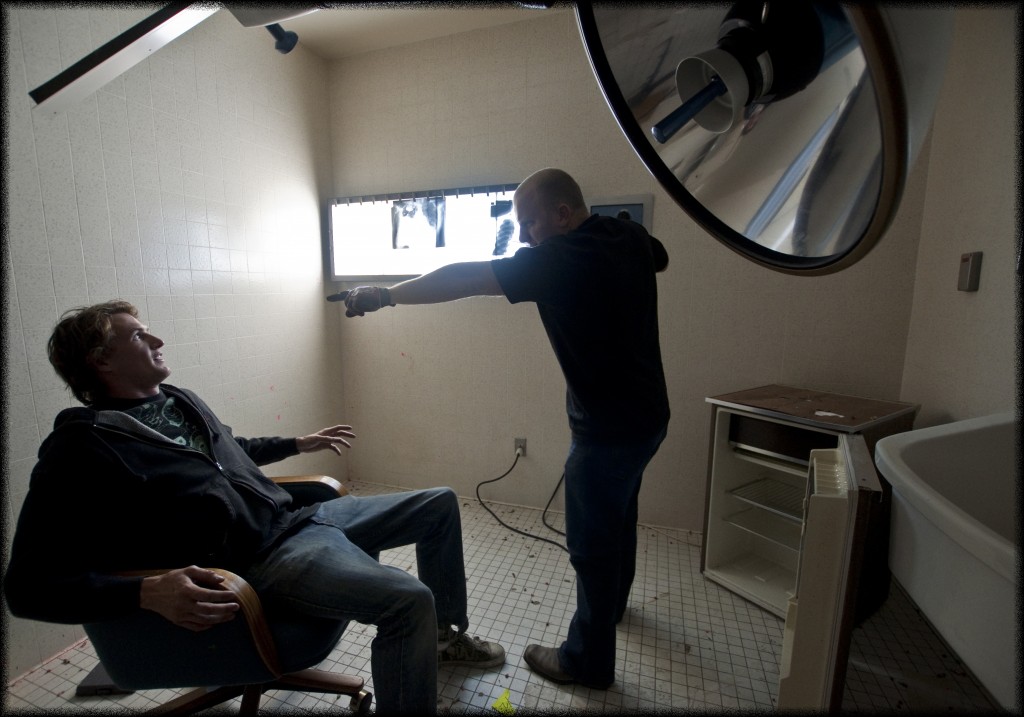
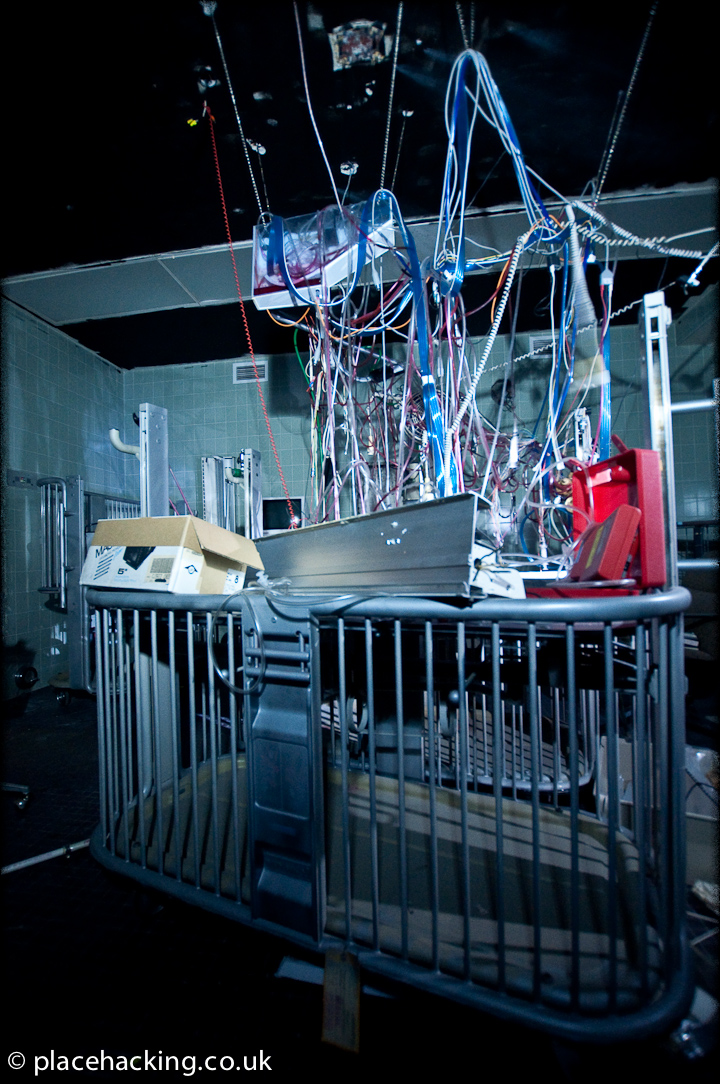
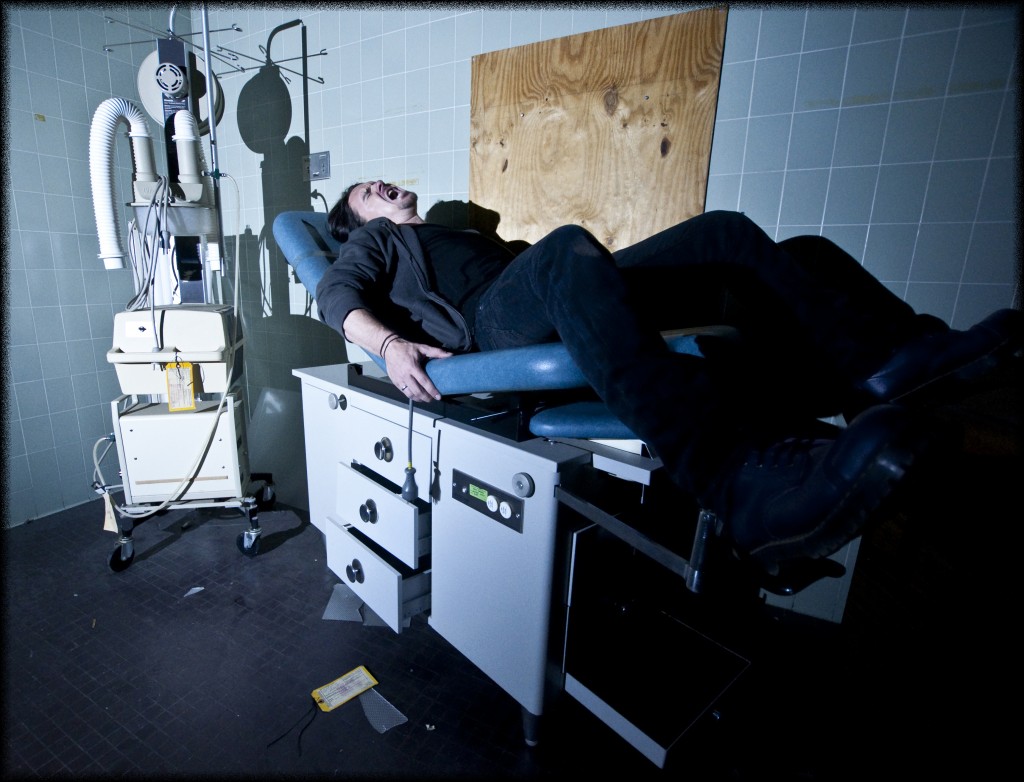
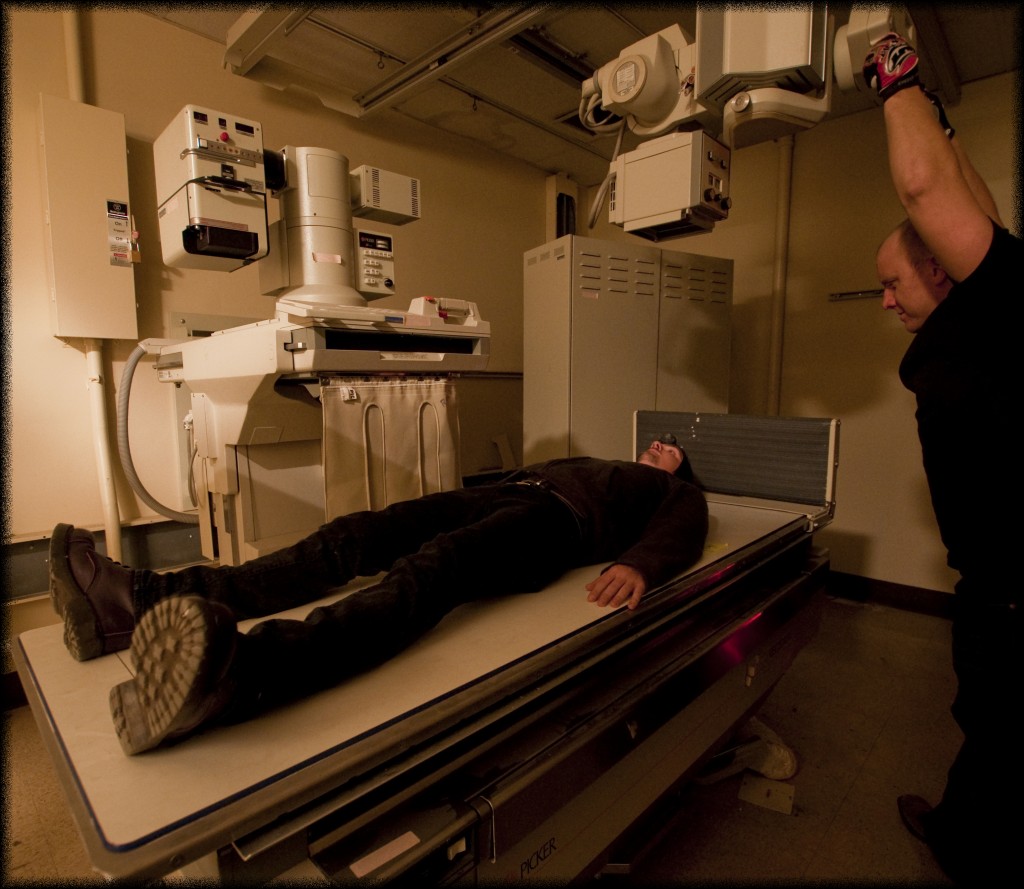
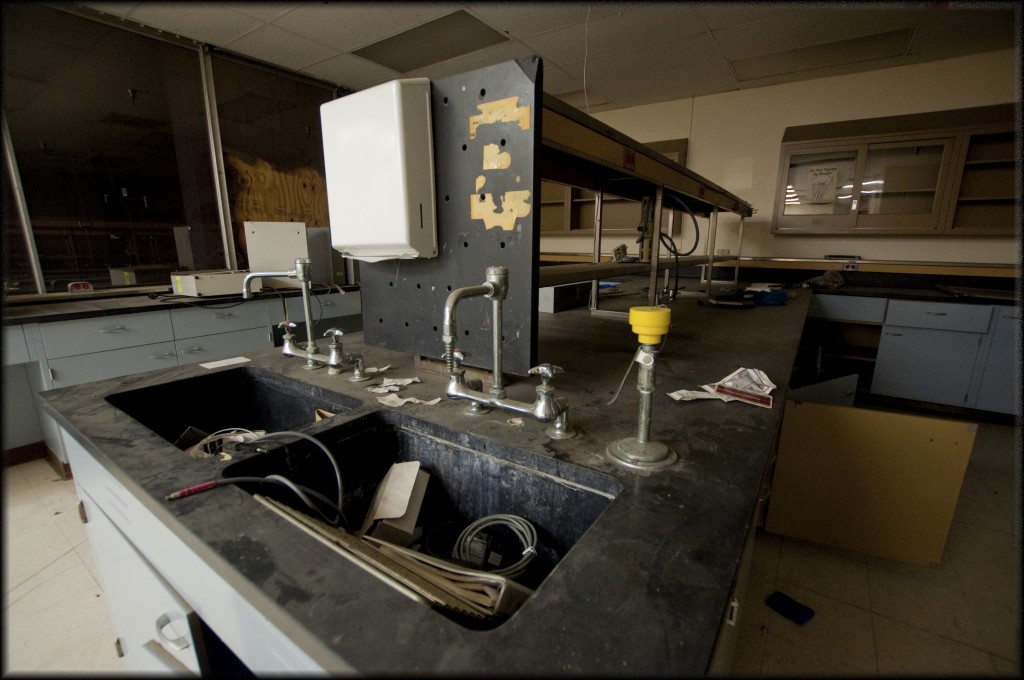
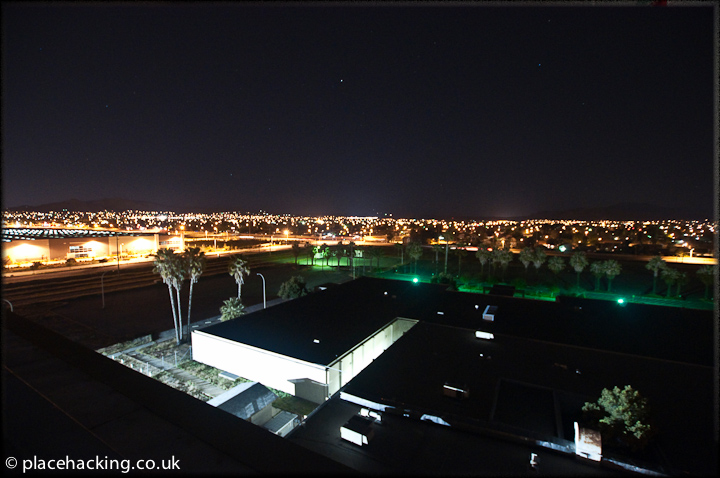
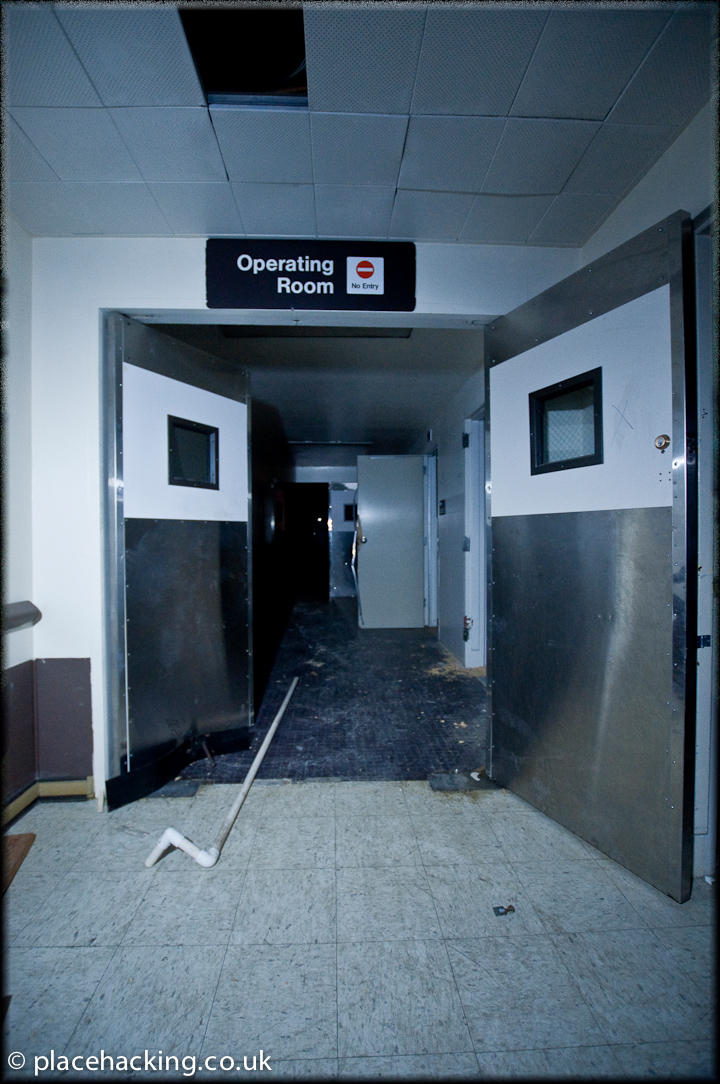
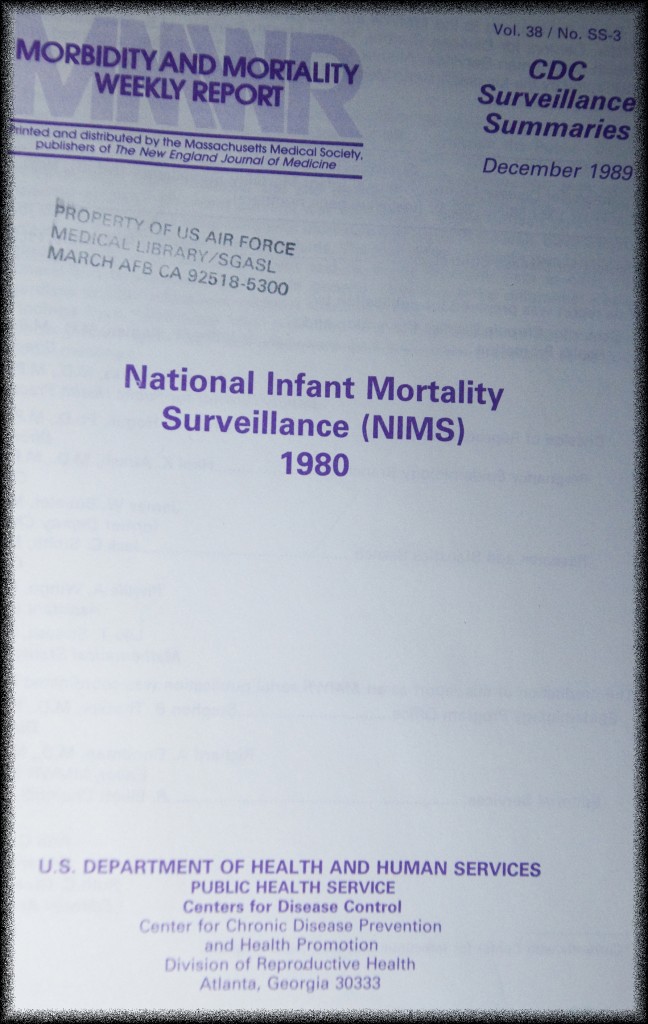
These photos are from an abandoned hospital on March Joint Air Reserve Base, a location with no address somewhere between Riverside and Moreno Valley, California. It used to be a full Air Force Base for 78 years until 1996 when Clinton cut the operations budget and a quarter of the 6-square mile base went derelict almost overnight.

Where the fuck is that janitor?

How classified?

Not very

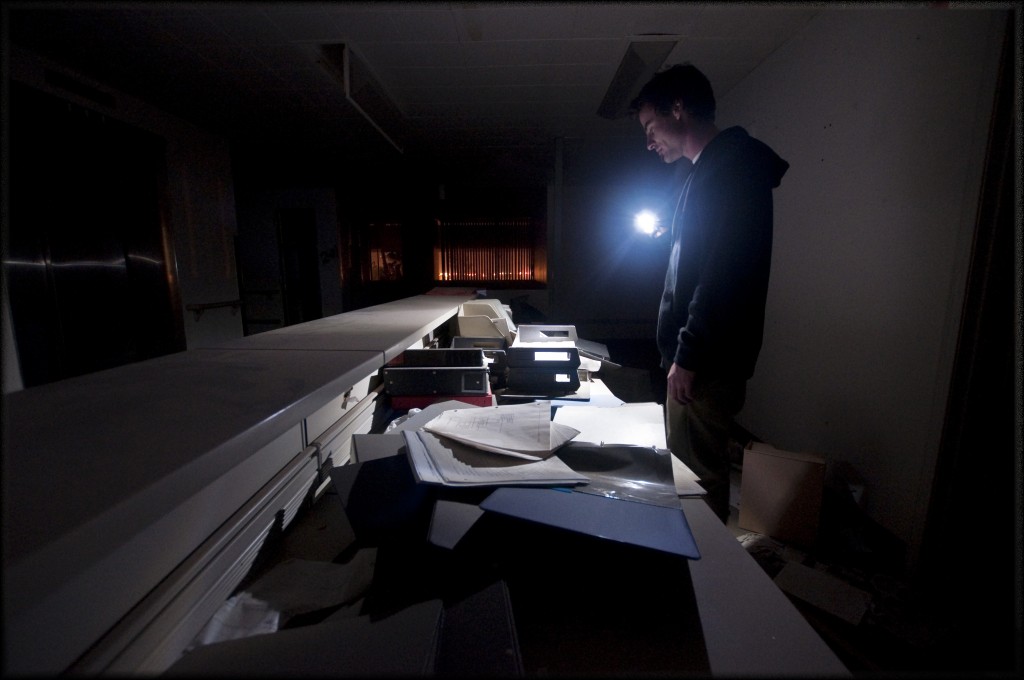
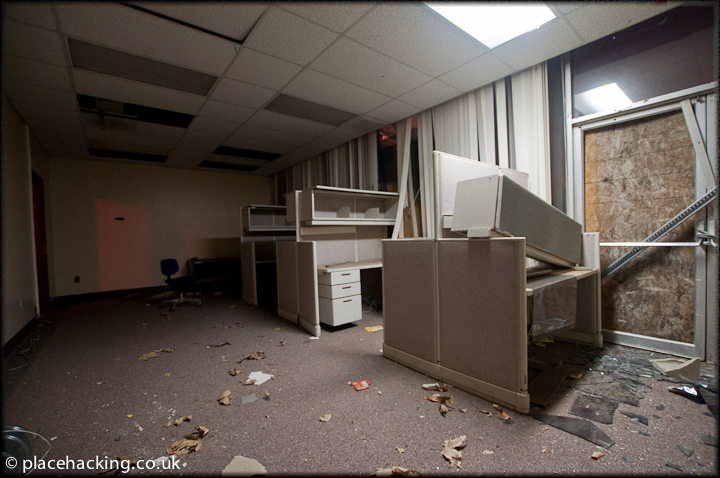
The empty corridors seemed endless, piles of desks and chairs the only things to be seen turn after turn. But as we moved into more discrete levels of the hospital, we began to find rooms full of artefacts, including some very expensive equipment.

I believe you have my stapler?

Bad news

Dangling

We were never modern

Pip is sure I have heart trouble

We were all enjoying the opportunity the play with expensive medical equipment. We were also enjoying the fact that everything was so well preserved in the building. Likely an effect, I assume, of being located on a military base. I mean, who would be stupid enough to go in there right? The lingering question in all of our minds though was this – why would the military leave all of this behind? We received part of the answer in the next room.

Somebody help me

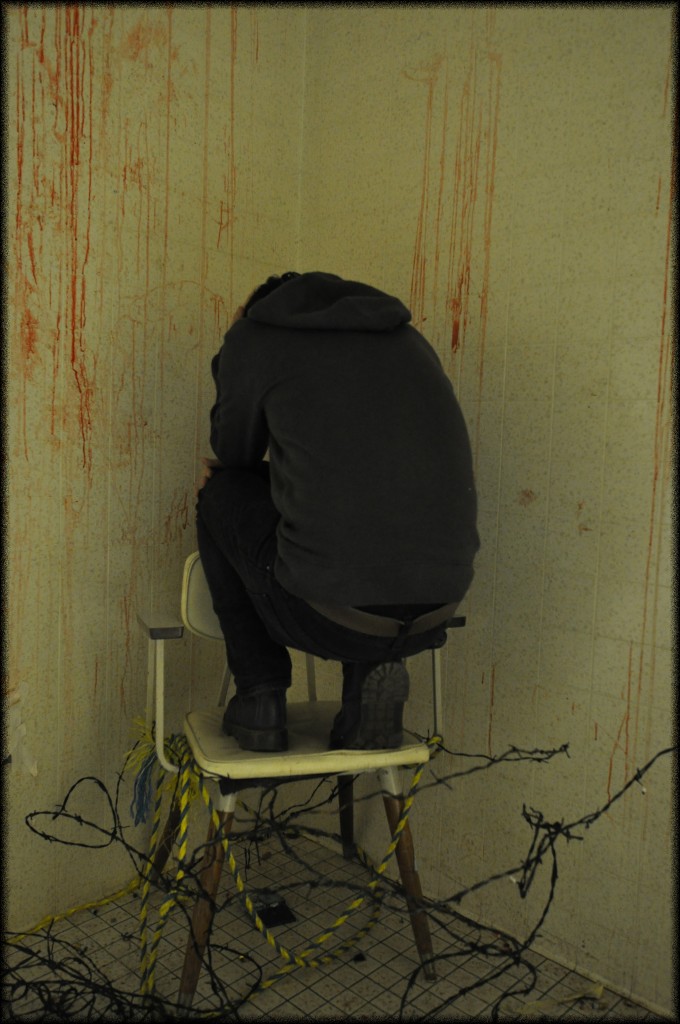
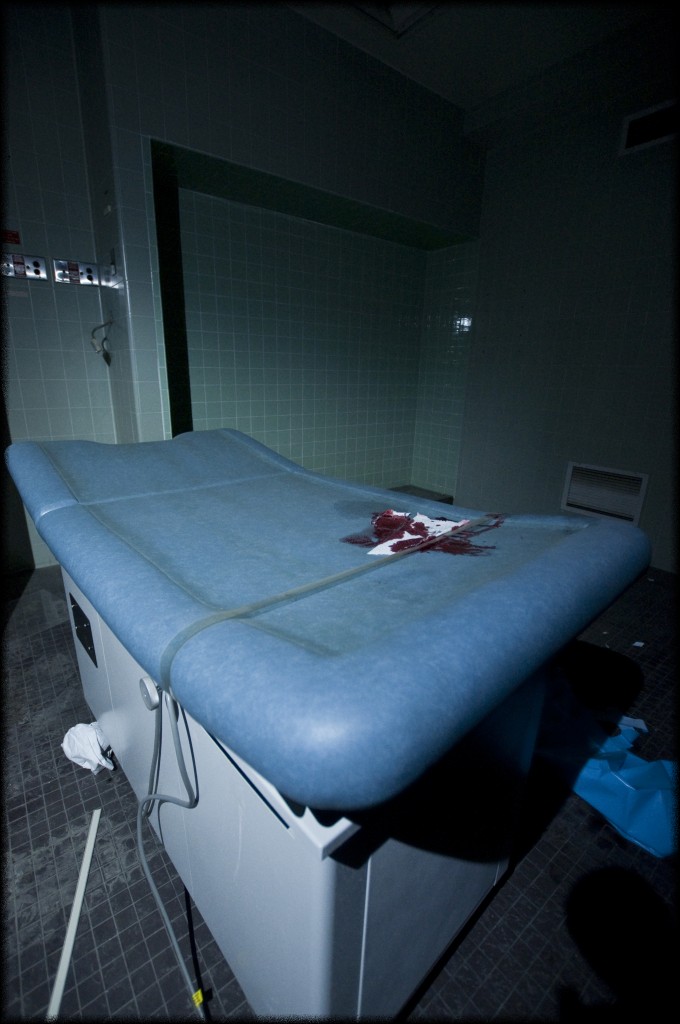
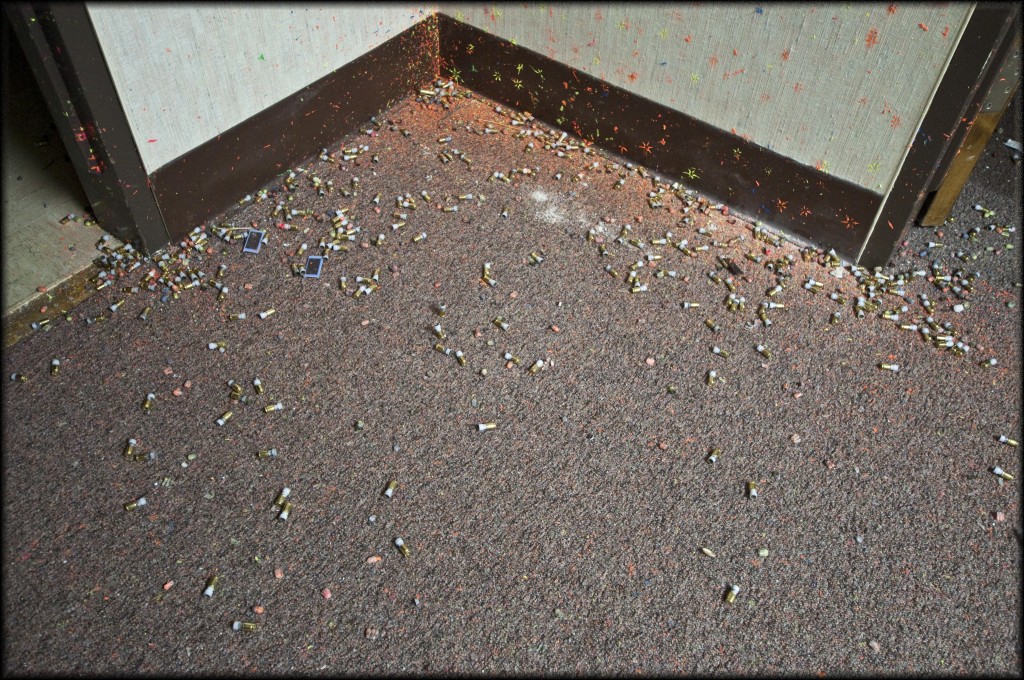
The building was apparently being used for urban warfare training. The idea is to create places that emulate different urban environments to train for hostile situations in those environments. Some places, like this room above, clearly had staged scenes with fake blood. In other places, it was not as clear whether the scene was “staged”.

Is that normal?

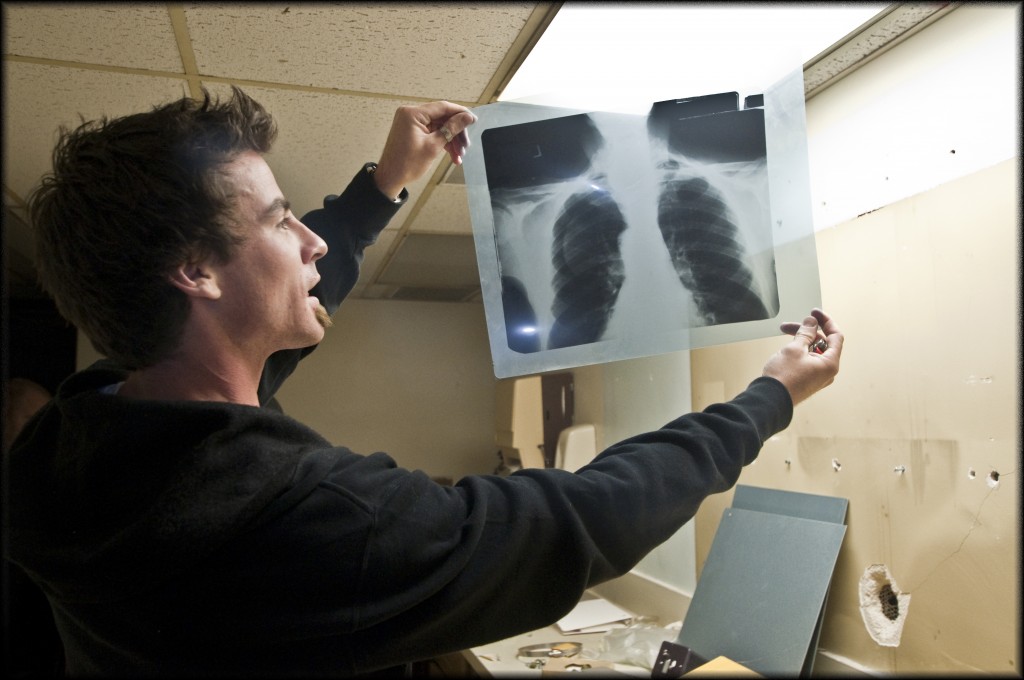
Sometime after returning home, I was astounded to find an article in the local paper, the Press Enterprize (PE), which detailed plans to build an $80 million medical facility on the base called March LifeCare. I wonder if taxpayers are aware of what happened to the last medical investment on this base? I wonder if taxpayers know that while “Donald Ecker, managing partner of March Healthcare Development, is said to want ‘to move on a breakneck speed’ on the project” (by the way he stands to make 2.2 million on the deal according to PE) there is a derelict hospital across the street being used for wargames? I wonder if any of the patients of this “old” hospital know that their x-rays are laying around in there?

Clearly I was not the only thing out of place here.

Paint bullets

A goner for sure

March Air Reserve Base is a minimum security base in a rather decrepit state. Still, with an abandoned military prison now explored as well as a partially active base, it makes me wonder – how porous are these boundaries? And more importantly, what the fuck are they doing with our money in there? I call for the in to be outed!

Wash that cash

Outed


Fiberglass and Tumble Weeds – Boron FPC

7 04 2010

“You should create your own icons and way of life, because nostalgia isn’t glamorous…live your life now.”

-Marilyn Monroe

Alien dump

I grew up in Riverside, California, on the Western edge of the Mojave Desert. My interest in urban exploration came from my childhood here, full of frequent trips into the Mojave exploring old mining towns to break up my rather mundane suburban childhood. Coming back to visit this year, I knew that what I needed from this trip was to rediscover what it was that brought me down the UrbEx path. So I hit the desert for some old school federal trespass.

Because of that green UFO?

My friend Joel tipped me off to the existence of Boron Federal Prison Camp, a US Air Force site that was abandoned  in 2000. I rolled into Boron on an incredibly windy day, with light rain splashing in off and on (rare here I assure you!). I found all the gates open and amazingly drove right past a dozen derelict buildings, straight up to the old water tower.

Dusty Industry

It was only when I stood at the edge of the cliff at the water tower that I realized how extensive the site really was. There were at least 30 buildings here, some multi-storied, spread out over maybe 5 or 10 acres.

Rural Sprawl

As I looked out across the flat expanse of desert toward Barstow, the wind was whipping my hair in my face and I was constantly wiping water drops off of my lens. I decided to take shelter in the only thing higher than the water tower – the stucco church.

Monument to the gods of television

Stencil worship

I stepped into the church and found myself in a silent room that had one wall painted and others covered in banal graffiti. As I stood there, I came to realize how much different this exploration felt than those I had been undertaking in Europe. It was so much lonelier. Part of this, of course, can be chalked up to the fact that I was indeed alone, but there was also a spatial dimension. It seems to me that perhaps because of the availability of space here in the desert, it is much easier to simply walk away from a place. And when that happens, an essence of loneliness particular to this dusty landscape seeps in. It is a loneliness, a sadness, so deep that even destruction of the place does nothing to erase it.

When I explore in more urban landscapes, the predominate emotion is fear-fuelled adrenaline. There is a sense of urgency that drives explores and has been one of the difficulties I have encountered in trying to get video footage of our explorations – we never really stop to take it in. We move fast, we pack multiple explores into a day. It’s like derelict architecture speed dating.

In contrast, this federal prison invited me to stop, to spend the day, to really take the time to let it scar me. It felt less like a conquest and more like an invitation to meditate on the possible pasts that led to it’s untimely death. The site encouraged more of an archaeological eye, little artefact mysteries to be uncovered around every corner. The fear of being caught here (which was very high, with possibly sever consequences) was so overwhelmingly overshadowed by the lonely introspection the place invoked that I simply sat down for some time to listen to the wind whipping power cables and slamming doors open and closed and forgot that a patrol might roll in at any moment.

I went on to explore the kitchens, mess hall, work corridors, carpentry shop, the fire station, basketball court and finally the “vehicular component factory”, whatever the fuck that means. It had been almost completely stripped out, every window broken, and despite the emptiness of the place, it continued to have a particular thickness to it. It was a place full of sad memories, left to rot our here 50 miles from the nearest city where the incarcerated inhabitants could do no harm.

Deserted

Communal loss

Barricaded

The camp seemed to be connected with a company called Unicor – a name which I think has an oddly Orwellian feel to it. There was also an active air traffic control station on site covered with live cameras which was beginning to make me a little nervous 3 hours in.

1984

Road to government vagueness

I jumped into the truck to follow my gut instinct that it was time to leave, feeling rather satisfied with my day, when I noticed a side street I had not seen before. I drove down it, finding nowhere to park (a vehicle is a serious limitation to exploration I have realized – hiding a car in the desert is usually almost impossible) and walked into what turned out to be derelict inmate housing.

Reasonable traffic conditions

As I walked down row after row of empty cul-de-sacs lined with derelict tract homes, I was pulled right back into the sadness of the place. I walked through people’s homes and looked at their landscaped yards, taking notice of which domestic plants had escaped and were thriving without human intervention. In one, I found a constructed mini-bar and waited a while for a drink to be served. In another, a brick oven filled half the backyard. I imagined summer BBQs in 120 degree heat, families of inmates coming together for a few drinks and a chat about who-was-whose bitch that week.

Patio Party

I was struck anew by the imposing affectual qualities of the place and when I reached an abandoned playground. I stopped to play alone on the teeter-totter.

Does anyone remember playing here?

By the time I left the housing area, all numbed by the weirdness of my experience, my truck was blocked in by a stereotypically overambitious security guard wearing a fake federal badge. He told me I had been filmed and that he was supposed to call the FBI (I call bullshit on that one buddy) but I think he could sense that I had come here for different reasons than he might normally encounter. We ended up chatting about the history of the place and he sent me off with a stern warning, locking the gate behind me.  After a day of modern ruins, ghosts and self reflection, I drove off into the Mojave Desert in a familiar cloud of pink dust looking for the next adventure.

Not that I'm nostalgic or anything


Going Pro Hobo: European UrbEx Road Trip

10 12 2009

4 explorers, 5 Countries, 2000 miles, 16 abandoned sites, 5000 photographs, 3 hours of video footage, a pocket full of loose change to live on and a car full of $7000 worth of camera gear. It’s these last two bits that I find so amusing, these are the pieces of the puzzle that turn this from a hobo trip to a pro hobo trip I suppose. That and the radical mobility of our opt-in faux homelessness.

After our last trip to Europe, I wrote about urban camping. I felt like that long weekend away was a sort of like a wilderness retreat, a little escape from work and obligations to see something unstraited. Some people choose go to a pine forest for these retreats, we go to abandoned chateaus in Belgium. Seems fair enough.

But this trip was different right from the beginning. Part of it was due to the length of our expedition, part of it due to the dynamics of the crew. We had a crew of 4 – myself, Statler, Winch and Silent Motion, all up for it in a big way. We were long inspired by the perpetual homeless adventures of Dsankt at Sleepy City which seemed to pry open a new level of UrbEx or, at the least, open up new possibilities for adventurous play. So we struck out on a Sunday night from Reading, UK, across the channel on the P&O car ferry, through the sadness of Calais, France, just across the border into Belgium to Kosmos, a hotel with a weird Russian art-deco theme that had closed in 1996 where we planned to stay the night.

Transgressive Mobilities

What a shithole

Tourism?

Getting into it

Rated 1 Star on Travelocity

Strangely enough, given what a pile of crap this place was, it was really hard to get into. Finally, after making our way in, ferrying in bags of clothes, food, whiskey and 8 bottles of Chimay looted from a road side stop, we settled in for the night, with a gorgeous view of a random Belgian valley spread out before us, full P&O shot glasses of cheap drink and a horrible rattling noise from the winds assaulting some loose flap on the roof above us.

Not broken yet

Penthouse

Winch

Winch taking in the epicness

Unstrap

The Goblinmerchant gets naked

We ended up finally dragging tables and chairs from other rooms to board up the windows which were allowing massive gust of wind and rain into our sleeping quarters. Essentially, we started doing home repairs. That night, falling asleep to Aphex Twin’s Selected Ambient Works Volume II playing softly on my phone, I had dreams about the property owner showing up weeks later to find that somebody had actually repaired their building, boarded up windows, brought in and cleaned up couches, filled the bookshelves with tea lights. I imagined them being, at first, dismayed and confused and then… amused, a small smile cracking their stoically disappointed Belgian head.

The thing I started thinking was that our move from UrbEx into pro hoboness was actually a move that benefited property owners because, as Silent Motion put it, “our sleeping in the space builds a more intimate connection with it, we become a part of the fabric.” So going pro hobo, in my mind, even the documentation aspect that you are scrolling through right now, is about place hacking, about finding intimacy in a world full of sterile engagement.

This idea was made even more funny when the property owners showed up at 8am the next morning and started putting up more fencing on the site. Between us and them, the place was going to be completely remodeled soon. We waiting 30 minutes or so for them to leave and made our hasty escape.

Although I am tempted to write about all 16 sites we went to, I can’t. The reason for this is, quite simply, that I cannot relay the epic nature of the experience to you in a blog posting, try as I might. With every day that passed, the crew got more raw, more volatile, more energetic, in a weird, confused sort of way. It was a delirious panic that I think would have even made Dionysus proud. I was drunk for most of it, partly because I do better fieldwork after a few beers and partly because the experience was so raw that it had to be shielded, it was like trying to stare into the sun. Now I know why so many homeless people drink.

Staring at the sun

Hallway

The raw light of experience

Boundaries that existed in our little UK bubble began to break down. We did not speak the language, we did not meet a single person outside of the grocery stores and petrol stations we ravaged, washing our hair in their bathroom sinks and leaving piles of trash in their parking spaces, running under the turnstiles at the restrooms that demanded 50 cents. All that existed, all that mattered was the adventure and the bond between us which grew tighter with every sip of Jupiler in the back seat of Statler’s car, with every step walked over squishy mold/carpet. We could not think about what was happening because as Dostoevsky points out “one must love life before loving it’s meaning.” And this love was on fire. We began infiltrating live sites, barbecuing dinner in wheelbarrows, lighting dozens of candles in random rooms of Nazi extermination camps and free climbing timber into bell towers in crumbling buildings to photograph the holes in the roof veiled in cloudy continental morning mist.

The films here were shit

Dinner sorted

Dinner cooked over pieces of the gas chamber

Europro

Do they know we're in here?

Winch was the primary conspirator of this little frozen-toed expedition. Always up for a challenge and a laugh, he had booked this absurd holiday in December, I think, to break our will. After all, only the broken can be admitted into the ranks of legend. After taking in a few leisure sites over the first few days, he hits us with the news – we are going after heavy industry. Now, given that I am about to give a paper on reanimating industrial spaces through urban exploration at the 2009 Theoretical Archaeology Group conference in Durham at the end of the month, I thought this is a grand idea. Until it actually started going down.

We walked up to Transfo, a power station in Belgium, to find it swarming with people. We waited until dusk. When we thought everybody had gone home, Silent Motion ninja’d his way in to the secure building past the motion sensing lights and infrared alarm system. We got in and snapped some pics for about 10 minutes before some worker ran up and started rattling the doors to the heavy equipment room. Whoops. Turns out they were not all gone, but Silent Motion clearly could give a shit and starting climbing the infrastructure of the building to get a landscape shot.

Roll me

Raw Metal

Pushing it

Ghosts of industry

On our way to Germany, we stopped to infiltrate Kokerei Zollverein, again swarming with people including professional photographers and men in suits. I swore that this infiltration would end badly. The only bad outcome, in reality, was my nausea from being meters away from workers as we snook past them and hid in the shadows. All my photos from there are shaky save two:

Up top

Fear processing factory

Pause

Pulled

After my moment of existential crisis, we made our way to an abandoned train yard Munster Gare, a glorious moment for me for some odd reason. Something about the intersections of transportation (mobility), dereliction (history, aesthetics) and remote location (opportunity for playfulness) made this my favorite site of the trip.

Titanic

I'm the captain of this ship!

moving?

The passengers

Woody

No more goods

Broken

Unnecessary

After my locomotive jizfest, we drove into Germany. I had not been since I was 19 years old when I pursued the country on a underage American-in-Europe beer run, and was dismayed to find that it was actually a really beautiful place. Mostly because the further East you go, the more derelict structures begin to dominate to landscape. I always thought of dereliction being about the failures of capitalism, but nowhere was abandonment more apparent that in East Germany, markers to the collapse of communism and the retreat of the Soviet Union. The group entered a fervor as we drove through the country side, everything began to look derelict. At one point I remember Silent Motion saying, “Hey there’s a building over there!” and Winch responding “Nice, does it has trees growing out of it?”

We had resigned ourselves to a week of squatting. It was safe to say, at this point, that we had all left our lives behind. I didn’t care about my research anymore, I just wanted to keep getting high on adrenaline. No one ever talked about their jobs, their families. We talked about girls, 4chan, about what country had the best beer (hint: it’s Belgium), about football. Even our Blackberries and iPhones served only to get us aerial photos and to update our facebook status so everyone knew how much more fun we were having than them being homeless, elite and stacked with fat kit. As we crept into East Germany, we were all broken.

I don’t mean that in a bad way. What had been broken was our expectations, our existential dilemmas, our need for unnecessary daily crisis. These things were overwhelmed by the experience of the present, by what was just around the horizon. I felt, for the first time on this project, like I had actually broken the research barrier. I was not studying UrbEx anymore, I was UrbEx. I sat in the back of the car, delirious and drunk, and saw Winch staring at his fingernails. He says “When you look at my fingernails what do you see?” I told him “Maybe the blood and sweat of old inhabitants.” He considered it and replied “I don’t want to clean them…” This was our arrival, the point at which we had committed to dreaming instead of sleeping. And with that, we moved into Berlin, into Ex-Soviet Territory. But that, my friends, is a story for another day.

Lucid

Never done


Au Revoire to Marc: The Dragon of Clapham

7 11 2009

So we’ll go no more a-roving
So late into the night,
Though the heart still be as loving,
And the moon still be as bright.

For the sword outwears its sheath,
And the soul outwears the breast,
And the heart must pause to breathe,
And love itself have rest.
Though the night was made for loving,
And the day returns too soon,
Yet we’ll go no more a-roving
By the light of the moon.

—   Lord Byron

DSC_4238

Innocent Stroll?

By the light of the moon, Marc and Hydra walked through the common, stopping every once and a while to blow something up. It was a quiet wintry night, a night for explorations of the soul before landscape, a post-phenomenological spectacle of Autumn ritual thought adornment. And then, the unthinkable happened. One explosion, set off by the Marc in a hysterical frenzy over his departure from the land of the mystics, shook the ground with a terrible rumble.

The grass of the common began separating, the earth seizing and shaking like a new born baby addicted to crack; trees capsized into an emerging crevice that revealed a hidden underground storage facility, untouched for 42.75 years, filled with the records of the lost souls dragged down to Dante’s 7th circle of hell.

Unexpected

An exposed vein

Where does this go?

Something new

Boxed memories?

Records of the Lotus War (Photo by LutEx)

A decision was made to explore this emerging subterranean wonder. Hydra, designated lead explorer on this spontaneously scurrilous expedition, entered the metal-lined den with trepidation; there was evidence of habitation, or at least adaptive reuse. The mole people had been here, burrowing into the earth, connecting the tunnel with another inhabited by a perpetually sleeping dragon that shook the tunnel with his deep exhalations.

The mole people were encountered soon after, mining away at the sidewalls of the tunnel, inviting collapse, but also inquiry, undertaken carefully by Marc who spoke conversational Molish. LutEx, master and commander of the underground, resided there with his Queen it seemed. They join the expedition for the promise of chocolate éclairs. Earlier that night, he tells Marc later, he mined a Jewel, and Diamond from the depths. The Diamond, as she then became known, joined the expedition on the promise of existential freedom.

As they move through the tunnels, LutEx explains that there was indeed a sleeping Dragon at the end of the tunnel, and that the mole people has constructed a wall between them and the beast to keep it’s steaming slumbering sighs from singing their eyebrows. It turned out they were not trying to dig to the Dragon, but to avoid it while working their way through the 7th circle. As Hydra commented on the quality of the construction, suddenly, running steps are heard.

Hazard?

Experiential barrier

The Goblinmerchant, vendor of the mystical, last seen at the Pyestock Stargate, emerges from the depths at breakneck speed, smashing through the wall in a brave but foolish attempt to challenge the Dragon. Little did he know, the Dragon had a guard. The Goblimerchant is caught in a time-space compression web, cast by a magical troll hidden in a subterranean enclave, forcing him back into the 7th circle, restoring the barrier the mole people had constructed, a barrier, which, it seems, the Dragon allowed to exist.

For his transgressions, the group sees the Goblinmerchant subjected to endless torture, first by having his hair pulled from the follicles by a diabolical goblin-engineered torture machine, and then tied by his feet and hung from the roof of the bunker, on show until the end of time for other daring explorers, an example of the dangers of crossing the Great Dragon of Clapham.

Caught

Torture and Punish

Born and died

Sisyphustic dilemma

With the expedition now complete, with lessons learned, The Diamond is indeed given her freedom, teleported back to the surface by a goblin transporter restored by the mole people to beam in food supplies and port.

And beaming

Beamed

As for Hydra and Marc… Last was heard they had joined LutEx and his Queen in the underworld, digging into the 8th circle of hell.


Real Life Role Playing Game (RLRPG)

19 10 2009
Is this a game?

Is this a game?

Anthropologists have recently been writing about World of Warcraft, Second Life and other Massively Multiplayer Role Playing Games (MMORPGs). Since many of these games have millions of players, with their own economies, cultures etc., it has been suggested that people within virtual worlds have developed their own culture. As an avid World of Warcraft player, I heartily agree. But I also love playing games in real life, and, in a sense, this is what UrbEx is all about.
Yesterday Marc took me to a site which felt very much life a game, a surreal landscape of industrial waste, technological failure and a ninja Ghurka security guard. We explored it, very carefully, and all went well, but when I got home, I re-dreamed the explore, making it the game I knew it was.

I call the result a Real Life Role Playing Game or RLRPG.

In a small forest, in a quiet neighborhood, there are trails snaking their way through the tress. Different paths straddle the border between the forest and fields, inhabited by Mums with prams on this lazy Sunday, and by pairs of flatmates and friends, jogging, trying to sweat out remnants of last night’s snakebite extravaganza with girls in too-short-skirts. On one of these trails, in a black hooded cloak, walks Marc of the Cata Clan, Lvl 80 Elite Explorer, back again to conquer Pyestock for bonus explorer points before returning to his subterranean home in the Paris Catacombs.

Marc moves to the perimeter of his target, taking note of the Ghurka guard walking along side him, without looking in his direction, noticing that the Ghurka is following his movements. And eyes. He has been spotted. Marc breaks into a run, trees passing by like cars on a busy highway. With a quick glance to the side, he notices the guard is keeping pace. An elite guard. Merde.

Rookinella was right to be scared and stay home today, this guard cannot be defeated with felt or plastic pirate swords. With two glancing kicks off of the leaf cover, Marc is running up a willow tree, rebounding over the 4 meter triple barbed wire fence, his cloak hood flapping in the wind, distracting the Ghurka just long enough to pull the small blade from his leg holster. The Ghurka is cut down before he can get to his weapon, his mouth held from behind to muffle the screams of agony as he bleeds out.

Moving in

Moving in

Marc shoulders the guard (got he’s heavy for such a little man!) and sneaks stealthily into the entry point, the Stargate chapel, where his next surprise awaits. He stuffs the guard under the mesh catwalk and walks over to a large circular disk on one end of the room. With a deep breath, he grabs the edge of the Stargate and pulls it open to unleash the Goblinmerchant, a daemon; a vendor of all things fantastic and mystical.


But what’s this? The Goblinmerchant smells humans. Turning his comrade, he can see that Marc has heard them long before now. A group of 4, fumbling their way through. No wonder, with security gone now. The perimeter is being breached. If they make their way to the Stargate, all hell could break loose.

They run off, low to the ground, weighted down by field equipment and supplies pulled from the Stargate, supplied for documentation of the Cata Clan invasion. Through the dangling Cat 5 cables, past the air tunnel control room, up the rusty ladder. Four fellow explorers lie in ambush and a battle almost ensues until we realize they also hold a key to the Stargate.

The documentation begins, one room after another, small items and large machines from humanities forgotten industrial past, a legacy of materiality replaced by computer models and office jobs in Slough.

Controlling the minds of workers?

Controlling the minds of workers?

An exploded reactor, lucky we were there to prevent radiation leakage!

An exploded reactor, lucky we were there to prevent radiation leakage!

Mail delivery system

Mail delivery system

Heard the seashore in these

Heard the seashore in these

Tunnels or cables? Was I in those?

Tunnels or cables? Was I in those?

Flying over the site with a temporary upgrade

Flying over the site with a temporary upgrade

Don't look down

Don't look down

Dirty row, collected for XP

Dirty row, collected for XP

Goblinmerchant calls control to tell them the mission has been accomplished. He is awarded 3 mana potions and 5000XP points.

Phone home

Phone home

Documentation complete, Marc enters the energy capacitor, a small proton particle subfield generator, and Goblinmerchant flips the switch, firing him back to Subterranean Paris.

Impossible

Unstoppable


The Primacy of Presence

14 10 2009

It’s only been two days since I have returned from Belgium and I am already fiending for my next explore. I know it’s just around the corner, I have a few invites to go places this weekend, but in the meantime, I am stuck here behind my computer writing grant applications and trying to catch up on my field notes, taking short breaks to look at pictures like this one:

Somebody's house, nobody's home

Somebody's house, nobody's home

This was a stately home that Vanishing Days took me and Marc to a few weeks ago where we all shared some angsty moments in a beautiful hallway with a spiral staircase, a dome-shaped skylight and some very large mirrors.

Space Invaders

Space Invaders

The thing about this house, and the reason, I think, why I keep going back to look at the photo, is that it was clearly not abandoned very long ago (I heard 1998 – so maybe 11 years). Generally, I find that the more recently a place was abandoned, the more intersting it it to explore, because it has some sort of presence. You can feel who was there. At times, you can feel thier grief and loss. Sometimes, it seems even more visible, some small piece of crumbling failure, a left behind artefact or scrawled note. Maybe it is the line between UrbEx and Infiltration and my need to get closer to that line is becoming greater as I have to feed that addiction.

Forgotten pet

Forgotten pet

Vanishing Days, Marc and I saw this bird trapped between door frames and shutters, to panicked to get out, not intelligent enough not to get in in the first place. We saved it, but quickly realized that there were piles of dead ones behind the windows. We were forced to accept that this was their fate, just like the house, now no one’s home, which would die a slow death. But for a day, the house was enjoyed, playful desires were realized, new shoots of life were located, and space became place. As I stare at the picture of this beautiful abode, I like to think that it appreciated our visit.

Spun

Spun

Silk

Silk


Urban Camping in Belgium

12 10 2009
Hidden Monuments

Hidden Monuments

The time? About 11pm. The place? In the parking lot of a Carrefour supermarket somewhere near Liege, Belgium. It’s a weird place to begin the story of my recent road trip with Winchester, Statler, Tigger, Rivermonkey and Furtle but the urge to do so was prompted by something Winchester said.

As we were unpacking/repacking the vehicles for what seemed like the 20th time in a day, pulling out bags of clothes, sleeping gear, food, a pith helmet, Mary Poppins DVDs and a stuffed squawking bird, preparing for our second night sleeping in an abandoned place, Winch says ‘this is like urban camping.’

I have to agree. I have only had one such experience, a few months ago when I slept in the Paris catacombs with Marc and Hydra, but I have come to conclude, as did Winch, that this sort of camping (primarily prompted by the fact that we are all poor as dirt) surely puts ‘wilderness’ camping in a new light. I later asked the group what they thought camping in a place ‘added’ to the explore and although everyone had different ideas about this, everyone agreed that it definitely changed the nature of the explore, heightened it to some extent.

Camping with ghosts

Camping with ghosts

A recently received a new book called Interior Wilderness, a nice little collection of photographs from a guy called Ed Roppo (rustyjaw). On the back of the book, Ed writes that “abandoned buildings are a kind of wilderness turned inside-out. He also notes that “the most beautiful sites in abandonments are the result of natural processes left to operate on man-made materials”.

I wonder if part of our fascination as urbanites living in areas where nature in sometimes not readily accessible is that we can feel it in ruins. It humbles us, it reminds us of our place in the world, it reminds us that Mother Nature can take back what she has given at any time. Any small vine can collapse a concrete wall within years, sometime months, and in a few hundred, or a few thousand, as Alan Weisman so poignantly points out in his book The World Without Us, the great remnants of human civilization would be buried in the matrix of memory, almost invisible to the world, useful to the plants and animal left behind in ways we can never imagine.

I once saw a deer drinking fro a mortar hole in a large rock in Lake Elsinore, California.

Older stuff

Older stuff

I thought of the Luiseno Indian who sat there for years grinding out that hole with a pestle and wondered if they were ever curious about the possibility that this grinding slap might one day becoming a drinking hole for deer no longer hunted.

Nature climbing up

Climbing up

Nature crawling up

Crawling down

Urban camping is about adventure, yes, but it also about reminding ourselves what are place is in the world. A night in a ruin puts you in touch with reality, with homelessness, with decay, with nature, and over a few sips off good whiskey and some photograph sharing, with our friends.

Old or new?

Old or new?

I have fond childhood memories of camping, backpacking and road tripping. For me, these activities were always something done in solitude, something done alone to give one time to reflect. But this new camping that I am doing is an echo of my life in London. Social, active, full of encounter, danger, inspiration and intrigue. My research is building a piece of work (now my new solitude), but it is also building a new self, an identity that I never knew I loved. And perhaps, after all is said and done, urban camping is not about camping at all, it is about finding meaning in life.


Anticipating Transience – Saying Goodbye to West Park Asylum

30 08 2009

Everyday you look on the forums, there seems to be some ‘breaking’ news about one of the derelict asylums around London being damaged or demolished. London UrbExers love these asylums for their unique histories, aesthetics and affectual qualities and often on weekends you can find dozens of groups roaming their corridors. But with the (almost complete) destruction of Cane Hill, perhaps the most famous of these asylums, I began thinking about what happens when these places disappear. I also began thinking, naturally, about how the anticipated transience of a place affects our experiences while in them.
Anticipated transience is a term I heard used by geographer Dr. Caitlin Desilvey at the Royal Geographic Society / Institute of British Geographers conference last week. As soon as she said the words, they stuck in my mind and got the gears turning about experiencing ruins as braided strands of past, present and future. I could make a case for these thoughts by discussing my visit yesterday to the West Park asylum with Marc.

West Park Courtyard

West Park Courtyard

Working linearly through these three concepts, we can first imagine that we go to ruins to read their histories. Sometimes this is actually literal. Yesterday is West Park, I found countless ledgers, notepads, pamphlets and newspapers.

A shitty picture of handwritten notes

A shitty picture of handwritten notes

Images of bodies are conjured up often in ruins, particularly by people’s jettisoned clothing and empty chairs which held bodies, but these other artefacts reveal that these ghosts also had minds. Notepads with logs of playtime activities in the child ward remind us that this was a work space/place for some and of childhood memories for others. Do these people still live? Do they think of this place? Is it full of their childhood memories, inscribed in the walls, peeling off with the puke-coloured yellow wallpaper? Would these artefacts that I am photographing be important to them, do these objects contain love or demons?
Love?

Love?

Demons?

Demons?

So these histories, fair enough, are enticing, but what about the present? Here we might begin to think about our experience, not in contrast with, but interwoven with these residual emotions and fleeting memories. We go to these places to read the inscriptions, to have bodily encounters which challenge our conception of everyday experience and to eventually begin writing ourselves into the landscape by photographing it / photographing ourselves in it. But we can also imagine the tendrils of emotion that we leave behind, the shared moments of fear and excitement that are left floating in the corners like smoke in a still room.
Writing ourselves into local history?

Writing ourselves into local history?

At some point we arrive at door of the future, and this is where I really get fired up about these new ideas. Part of our enjoyment of these places is clearly because of their ephemeral qualities – every time we go back to an asylum, it is different. Some explorer moved an old typewriter a meter to get better lighting on it, some chav tagged the place up, a group of kids had a party here., security put up a new board, a fox dragged the outside in. At the same time, the surrounding foliage is doing its slow work, with ivy creeping though the windows, mold taking down the walls, trees pushing through the floorboards, rain slowly picking at the roof tiles, encouraging the mold like a cheering fan in the stadium, “Yes, it screams, we can have this back too! Quick, they are not looking!” Our excitement registers when we see these changes because of our imagination of the future, because of the anticipated transience of these places. It gives us an image our ourselves written into this decaying future, our footprints in the dust.

And this, I would argue, is exactly what is missing from interpreted historic spaces or managed heritage sites – we cannot anticipate their transience because their material and memorial trajectory is regulated. We cannot see ourselves written into their futures because we are not ‘allowed’ to write ourselves into them. This is a point that heritage managers would be remiss to ignore.

But Marc was quick to reveal yet another aspect of these possible futures; that it is not just decaying places with are in a state of exciting anticipated transience. Infiltration of live sites such as construction sites also reveal potential futures, ones that we can imagine but may be difficult to see.

With rumours swirling about the imminent death of the West Park asylum, reinforced by the loss of Cane Hill, I thought about the fact that yesterday might be my first and last visit to West Park. Although it was bittersweet, I have to say that the awareness heightened my experience, creating an impetus for appreciation that may not otherwise have been as sharp. Maybe this is the point (conscious or unconscious) of these sorts of rumours – to heighten our experiences of exploration.

A premature goodbye?

A premature goodbye?