Playing with Power

11 07 2010

Your pain is the breaking of the shell that encloses your understanding.

-Kahlil Gibran

We are not depressed; we’re on strike. For those who refuse to manage themselves, “depression” is not a state but a passage, a bowing out, a sidestep towards a political disaffiliation. From then on medication and the police are the only possible forms of conciliation. This is why the present society doesn’t hesitate to impose Ritalin on its over-active children, or to strap people into life-long dependence on pharmaceuticals, and why it claims to be able to detect “behavioural disorders” at age three. Because everywhere the hypothesis of the self is beginning to crack.

- The Invisible Committee

GMT

Prison

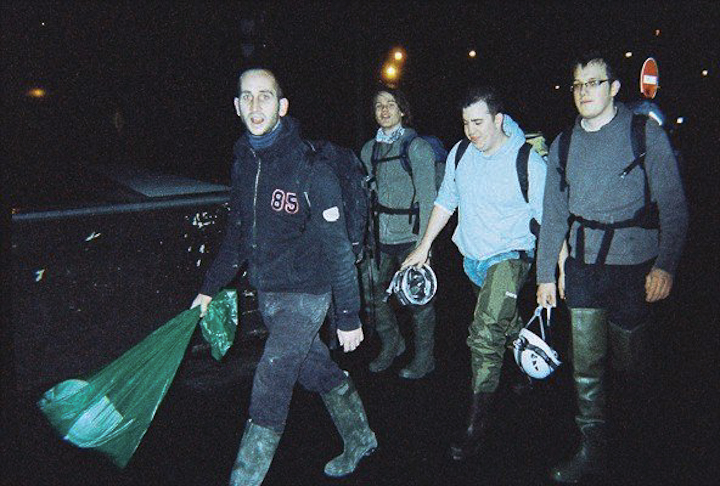
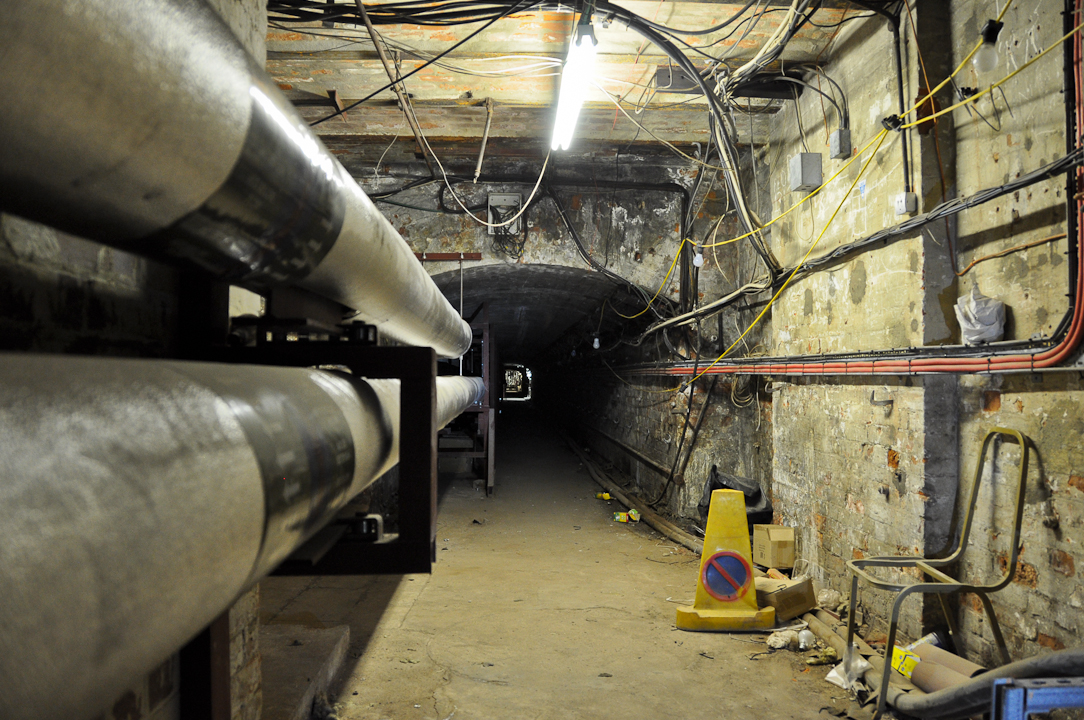
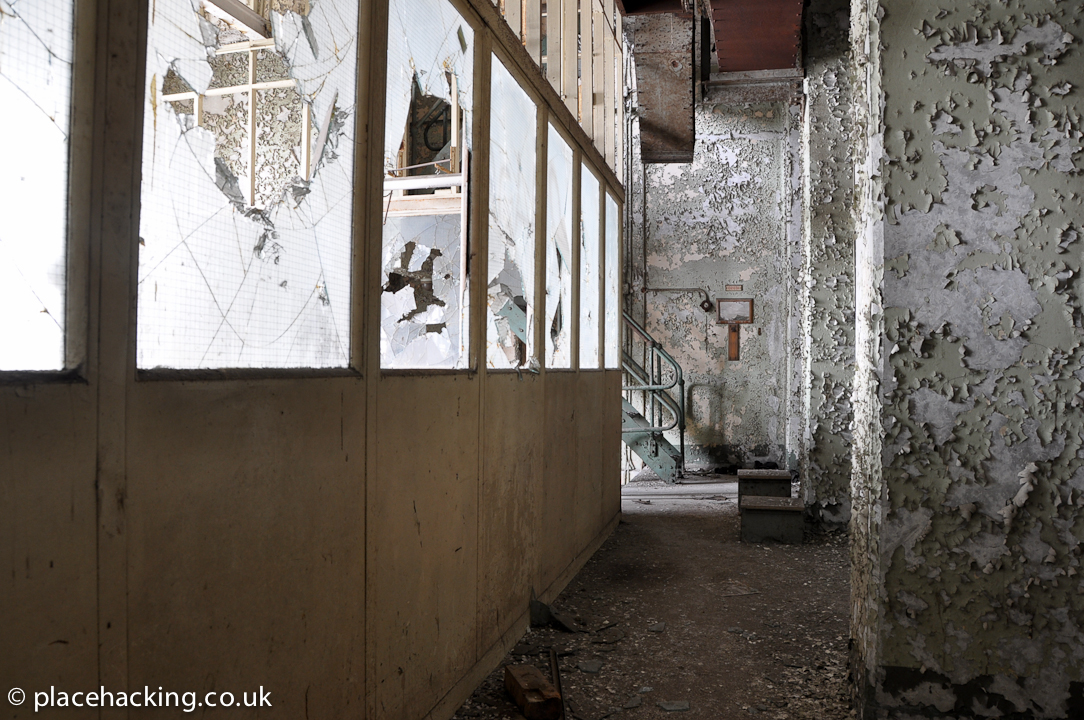
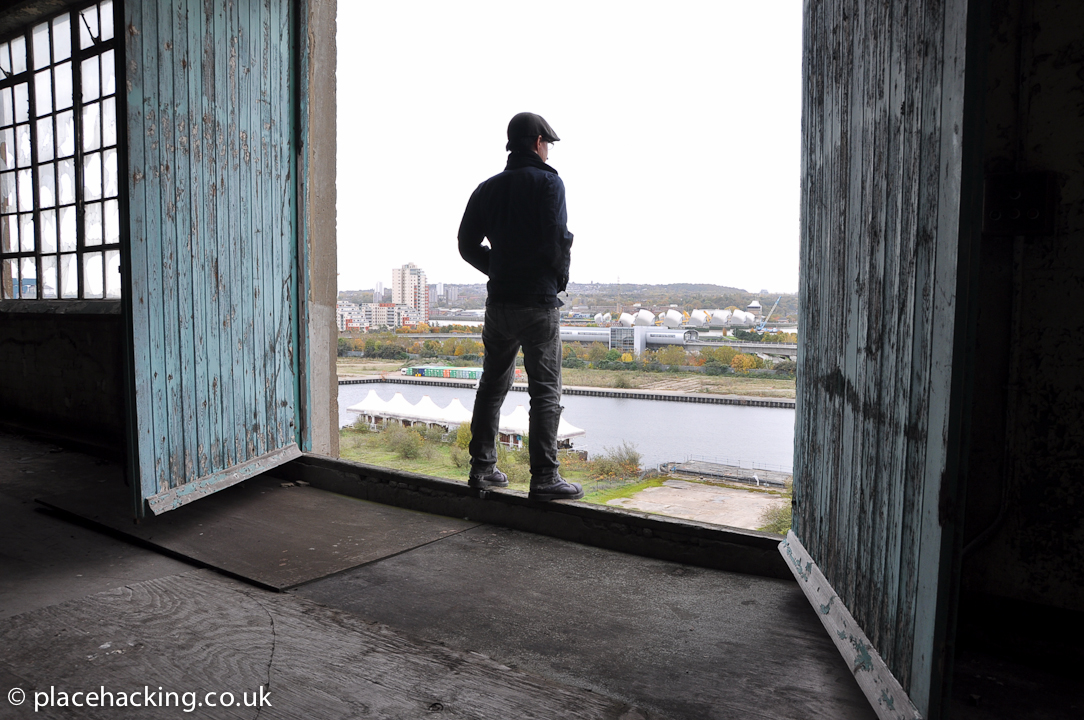
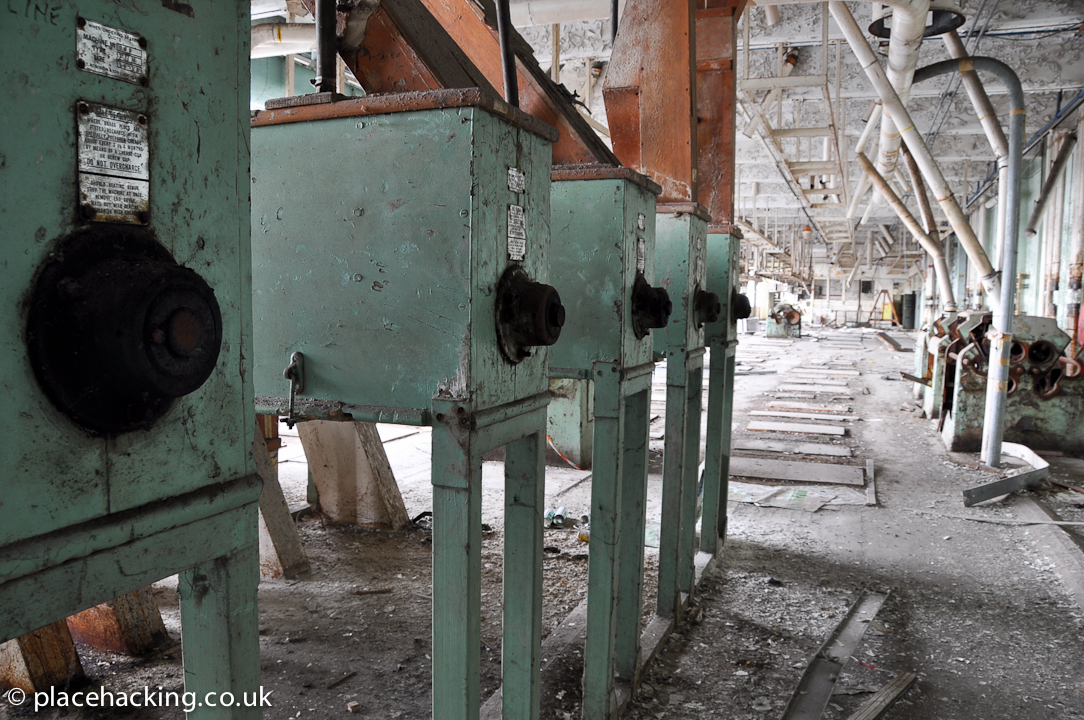
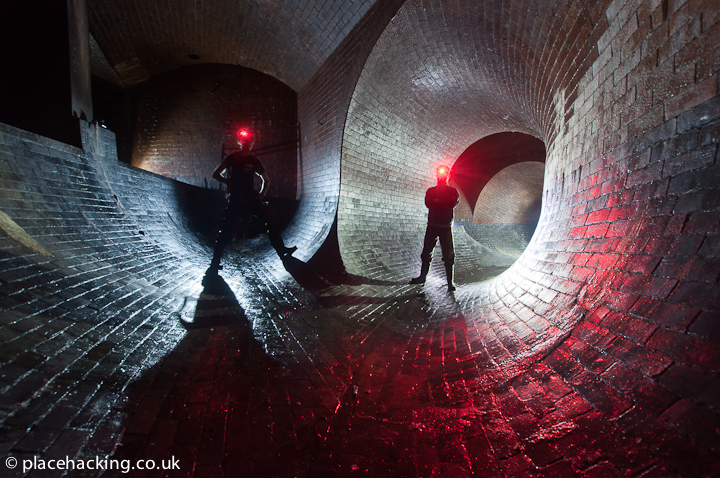
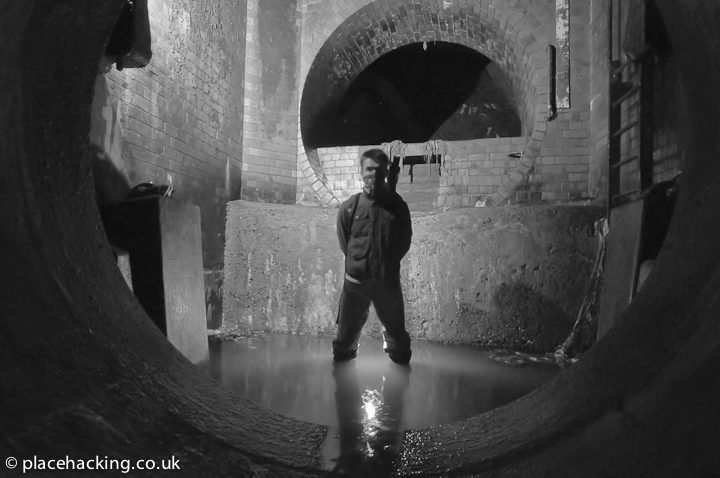
Exploration is the only medication my body subscribes to. My trembling fingertips reach for the sewer keys on my way out the door and my bowels twist in satisfaction. This addiction began as research, then I went native, then I lost my way. My love for ruins, my love for old stuff, slipped quietly into the present without even a little wink to let me know what was happening. A life spent looking for material traces of the past morphed into a series of events connected only by my churning belly that vaguely resembles art or a job in construction.

Please don’t expect me to say I found my way again because I didn’t. I was at Tate Britain the other day listening to Joseph Heathcott talk about digging through a photo archive. He said that as he dug, he became more and more confused, buried in images that he didn’t know how to contextualize. When he reached the bottom of the box of images, all he could see was himself.

We explore not to find places but to find meaning. Place hacking is only partly about architecture, history, dereliction or photography. It is about reminding ourselves what in life is worth experiencing. Our explorations embody a consistency between action and thought where what we dream becomes real. The addiction that comes along with that is the point at which your synapses start firing in new directions, making connections you didn’t know existed or that you lost somewhere along the way. It’s the point at which you realize you never want to work again, the instant at which you understand you never want to own a home, the moment when the revelation occurs that the terrorist threat is as non-existent now as it was in 1972 and 1023 and that most of the world, despite what the media would have you believe, is full of love and attachment, not hate and fear.

Thinking of you

I have lost my way. I hardly know the (a?) government exists. I have forgotten about commitments. I have widened my focus to the point that I can barely see anything not in front of me and yet eschew almost nothing, an optic of total stimulation. I spend all day with my friends. I am in love with every moment. I know my neighbourhood, my city, inside out. I just described childhood.

We have built up a shell around ourselves to defend our bodies and minds from the barrage of victimisations they are subjected to. We are left staring stupidly at what it is we are being asked to do, wondering again and again “is this it?” Joshua Ferris, in his novel And Then We Came to the End sums it up in this tidy moment seen through the eyes of Carl, a copywriter for an ad agency: “Directly to his right, something curious was going on. Two men in tan uniforms were hosing down the alleyway – a small dead-end loading dock between our building and the one next to it. Carl watched them at their work. White water shot from their hoses. They moved the spray around the asphalt. The pressure looked mighty, for the men gripped their slender black guns, the kind seen at a manual car wash, with both hands. They lifted the guns up and sprayed the dumpster and the brick walls as well. They spot cleaned, they moved refuse around with the stream. For all inert purposes, they were cleaning an alleyway. An alleyway! Cleaning it! Carl was mesmerized….good god, was work so meaningless? Was life so meaningless?”

We have become desensitized to the everyday. We have become part of the spectacle, ignoring emotional engagement with the world because we are so alienated by it. We formulate emotional shells that lock out beauty as well as pain and stop us from taking action. We are left in a state of perpetual isolation, mouths open, ready to pour in pills to fix what we lost. We are left inert, flaccid, empty. As Raoul Vaneigem once said, “people who talk about revolution and class struggle without referring explicitly to everyday life, without understanding what is subversive about love and what is positive in the refusal of constraints, such people have a corpse in their mouth.” Raoul’s thesis is outlined succinctly in the following diagram.

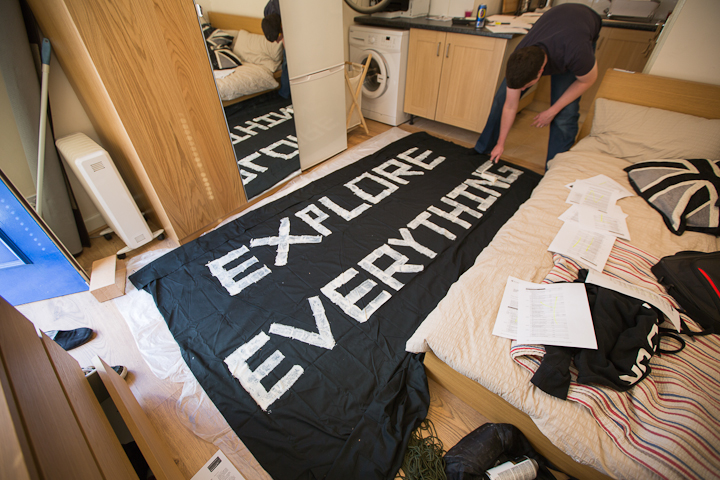
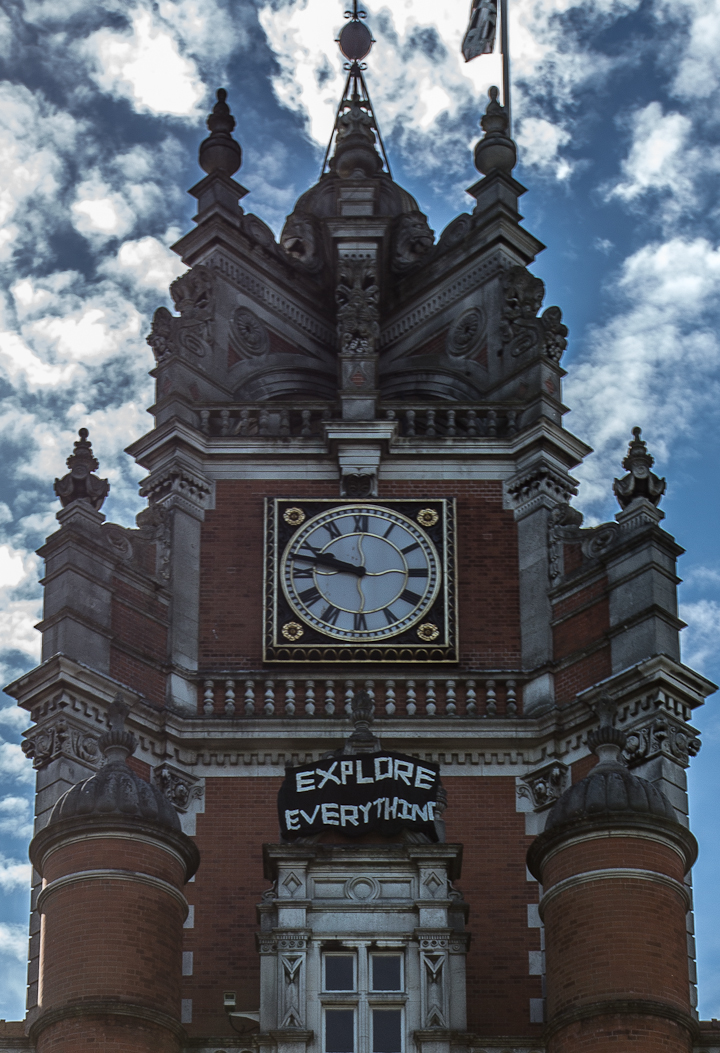
I suggest a different sort of medication to cure that corpse-filled mouth. Explore everything, shatter the shell and live free.

Dreamers

get vertical

playfully

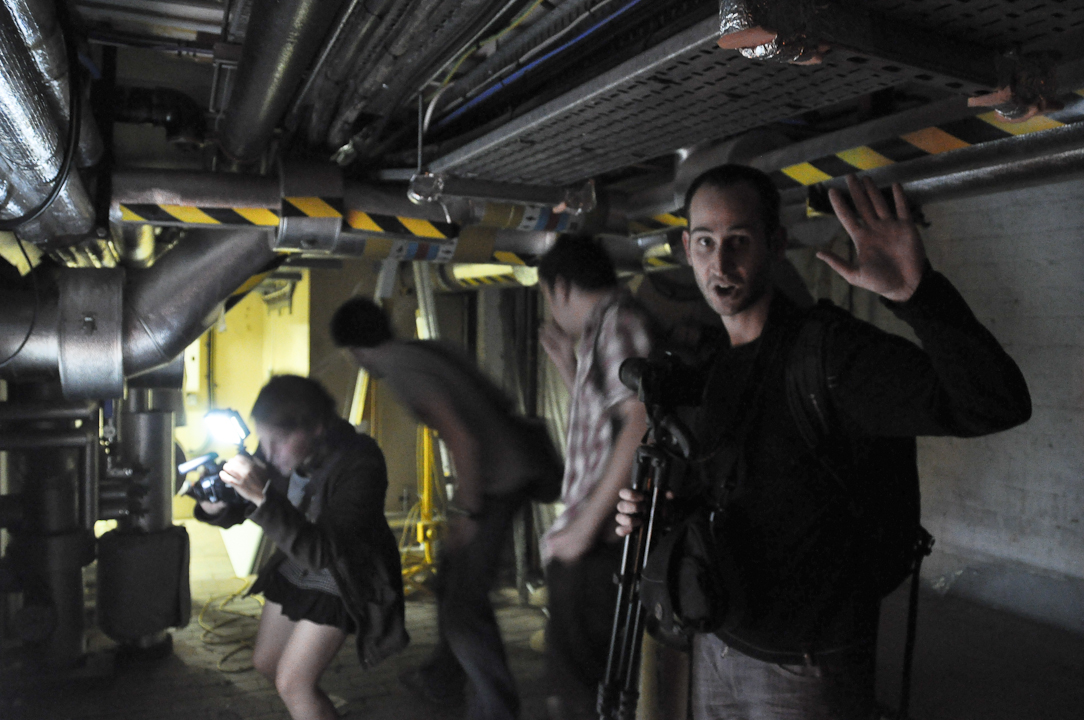
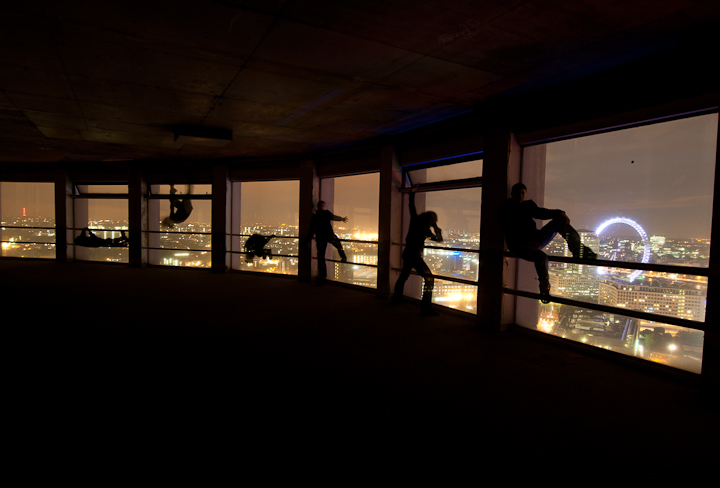
Move beyond your conceptions of exploration. Explore your mind, explore the dance floor, explore your broken family that your are ignoring while you read this drivel. Move into abandoned buildings, take locks off of doors, turn CCTV camera so they only see each other, light off fireworks randomly. Scream at people in the streets, talk to strangers, photograph police. Stop paying the state until they give something back other than the promise of a good pension if you join the military and avoid dying through war X. Take what’s in front of you and pour your heart into it. And if you have to quit your job to make that happen, then go. But do it in style – run out screaming into the sky to invoke your freedom. Even better, abseil out of your window and rappel to freedom.

Play is power. Freedom is power.

Photo by Marc Explo

We don't need 4th of July of 5th of November as an excuse to explode things in celebration (Marc Explo).

Our work ethic

__________


Cavendish Crematorium

16 06 2010

The Silken Hotel wasn’t open yet. We were standing there at the hoarding, Silent Motion and I, with that jelly of a man in his yellow vest pointing his finger accusingly, shaking with rage in a kind of mild convulsion, the orbed camera behind him spinning around and zooming in on our faces, like an eyeball rolling back in a head, making the convulsion a complete yet disembodied visceral experience for this lamentably flabby being.

The sergeant arrived, blue lights painting the walls, tires screeching. He almost rolled out of his car “UrbEx huh? Yeah, we get your kind around here sometimes. Tell you what, see that boarded up building across the street there? Let’s see if you can get into that one!” We meekly accepted the challenge as they frantically tried to fix the zip ties on the Heras fencing we had snapped off in our aborted miniature vertical scramble.

Challenge Issued

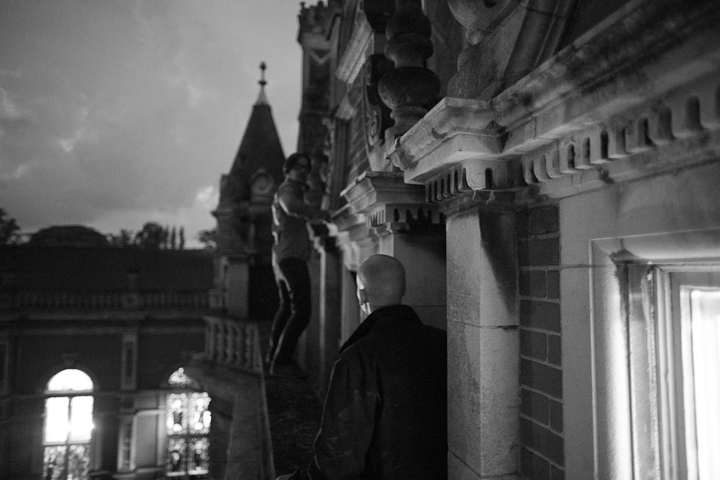
Across the street, we found that this building, Cavendish House it was called, was boarded up exceptionally well, stone gargoyles on patrol in moody up-lighting, three stone Furies screaming insults at us as we hung from ledges over the road, tugging on widows.

Stoney stares

Furies

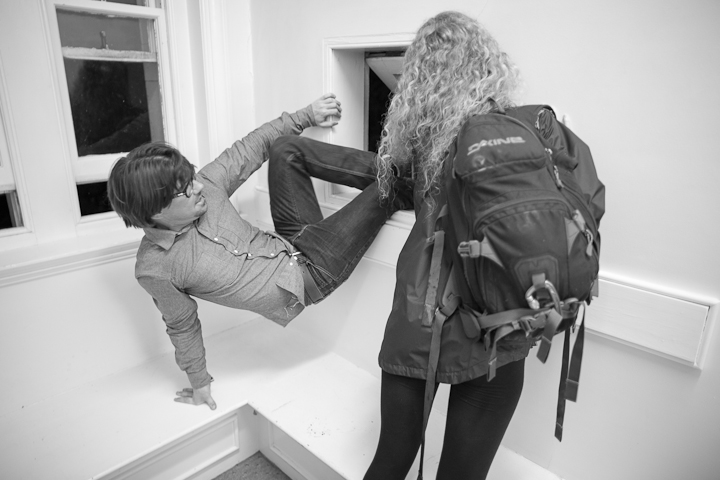
With a pop, a seal on one gave and Silent Motion swung it parallel to the floor. We dove through headfirst and when the window closed with a sharp bang, we were surrounded by silence. I crawled to the dirty pane on the other side of the room and peeked across the road. The sergeant was there, his belly still threatening to rip his utility vest in two. He was smiling, staring at the building and smiling. Creepy fuck.

Popped

Marauder

The exploration proceeded as we opened doors and windows for the next team of rogue adventurers, torches moving around like little bugs on walls looking for a hole to hide in. Silent motion found a generator running and hooked up to a small TV. He powered it up and we spent an hour watching an old Bollywood classic, a brief respite from the endless stairs. Room after room of blue and orange light comforted us behind the boarded up first floor. Unlikely to see, impossible to catch, invincibility ensued. Down or up? Up.

Dance music invoked

Creepy

The top of the first building (indeed we now realized there were three of these concrete monoliths, these plywooded Thatcherite government lumps of cement) had a roof that sat level with some office blocks. I peeked in the clean windows across, imaging the illicit affairs in office chairs that took place during our work hours, suits humping secretaries and capitalism. A blue church to our left looked like a plastic Disneyland air-filled jump house, replete with nostalgia for the abbey it was until Henry VIII seized it and ravaged it like a conquered Irish queen in the 16th Century.

Little things

Pink

The millennium eye approached us on the other side, that little monument we all love and love to say we hate. “Ride on that thing? Never!” Its millennium glow bounced off of the Thames, offering no apologies for its slow creep our direction. We did handstands, climbed radio antennae, pulled ourselves around in monkeyed feats of post-adolescent strength. We lost track of time. We didn’t care. Damn the horror of the night buses, we’ll ride ‘em!

The Furies descent

Eye

The lustful runs across the roof deteriorated eventually into a pink sky, and we knew that the time for morning coffee and a long walk to Elephant and Castle would soon be upon us. Time to go down. And down. And down. The building suddenly became distinctly subterranean.

Nuances of texture

It was wet here. It stunk like old dog, soaked in a summer-time sprinkler and shaking all over the children who uniquely appreciated the horrible musky shower, full of love. The empty corridors offered room for thought and made my stomach tense up, knot and twist, crying foul at the late (early?) hour. One turn revealed a large room with a safe, a thick door with twisty dials and an unsettling echo. We spun the lock, robbing the history from the place.

Sort of safe

The watery passage continued until we could stand it no longer, blistering feet soaking in the liquid filth. We went for the ProEx shot to cap off the night, twisted and intoxicated, drunk on our own success at pissing on every wall in this building. Lighting was essential, we decided, draining camera batteries and making film strips roll back on themselves in our multiple attempts to get it right.

Pr0 Shadows

Suddenly, the sharp slap of metal on tarmac stopped us cold. Voices. A quick retreat. How could it be, this UrbEx fortress infiltrated? The retreat continued into a side room where we sat, a gentle humming behind us. Suddenly, Silent Motion sprung up, hitting the hum with his torch and there is was – a meat grinder, working with no electricity to speak of, begging for fodder. I screamed a little, quickly covering my mouth to stifle the alarm, pride on the floor. The voices were closer now, finally clear enough to make out the distinct sound of someone saying “they’re over here.” I knew that voice.

Ground

We fled down the hallway once more, trying to keep the drips and splashes from reverberating, a considering how long the water ripples that announced our direction of departure would continue their hideous radial momentum. The smells of the place began to change as we moved. It smelled… like burning. When we found out why, it was already too late. The swollen bellied sergeant and the jelly-man sidekick were on either side of us, laughing as we both stared in horror at the door to what looked to be a huge furnace.

Burned

“Welcome to Cavendish Crematorium!” The sergeant yelled, spit streaming from his plump pink lips. “The last stop for nosy UrbExers!” Next to me, Silent Motion sighed, staring into the murky water.


Fiberglass and Tumble Weeds – Boron FPC

7 04 2010

“You should create your own icons and way of life, because nostalgia isn’t glamorous…live your life now.”

-Marilyn Monroe

Alien dump

I grew up in Riverside, California, on the Western edge of the Mojave Desert. My interest in urban exploration came from my childhood here, full of frequent trips into the Mojave exploring old mining towns to break up my rather mundane suburban childhood. Coming back to visit this year, I knew that what I needed from this trip was to rediscover what it was that brought me down the UrbEx path. So I hit the desert for some old school federal trespass.

Because of that green UFO?

My friend Joel tipped me off to the existence of Boron Federal Prison Camp, a US Air Force site that was abandoned  in 2000. I rolled into Boron on an incredibly windy day, with light rain splashing in off and on (rare here I assure you!). I found all the gates open and amazingly drove right past a dozen derelict buildings, straight up to the old water tower.

Dusty Industry

It was only when I stood at the edge of the cliff at the water tower that I realized how extensive the site really was. There were at least 30 buildings here, some multi-storied, spread out over maybe 5 or 10 acres.

Rural Sprawl

As I looked out across the flat expanse of desert toward Barstow, the wind was whipping my hair in my face and I was constantly wiping water drops off of my lens. I decided to take shelter in the only thing higher than the water tower – the stucco church.

Monument to the gods of television

Stencil worship

I stepped into the church and found myself in a silent room that had one wall painted and others covered in banal graffiti. As I stood there, I came to realize how much different this exploration felt than those I had been undertaking in Europe. It was so much lonelier. Part of this, of course, can be chalked up to the fact that I was indeed alone, but there was also a spatial dimension. It seems to me that perhaps because of the availability of space here in the desert, it is much easier to simply walk away from a place. And when that happens, an essence of loneliness particular to this dusty landscape seeps in. It is a loneliness, a sadness, so deep that even destruction of the place does nothing to erase it.

When I explore in more urban landscapes, the predominate emotion is fear-fuelled adrenaline. There is a sense of urgency that drives explores and has been one of the difficulties I have encountered in trying to get video footage of our explorations – we never really stop to take it in. We move fast, we pack multiple explores into a day. It’s like derelict architecture speed dating.

In contrast, this federal prison invited me to stop, to spend the day, to really take the time to let it scar me. It felt less like a conquest and more like an invitation to meditate on the possible pasts that led to it’s untimely death. The site encouraged more of an archaeological eye, little artefact mysteries to be uncovered around every corner. The fear of being caught here (which was very high, with possibly sever consequences) was so overwhelmingly overshadowed by the lonely introspection the place invoked that I simply sat down for some time to listen to the wind whipping power cables and slamming doors open and closed and forgot that a patrol might roll in at any moment.

I went on to explore the kitchens, mess hall, work corridors, carpentry shop, the fire station, basketball court and finally the “vehicular component factory”, whatever the fuck that means. It had been almost completely stripped out, every window broken, and despite the emptiness of the place, it continued to have a particular thickness to it. It was a place full of sad memories, left to rot our here 50 miles from the nearest city where the incarcerated inhabitants could do no harm.

Deserted

Communal loss

Barricaded

The camp seemed to be connected with a company called Unicor – a name which I think has an oddly Orwellian feel to it. There was also an active air traffic control station on site covered with live cameras which was beginning to make me a little nervous 3 hours in.

1984

Road to government vagueness

I jumped into the truck to follow my gut instinct that it was time to leave, feeling rather satisfied with my day, when I noticed a side street I had not seen before. I drove down it, finding nowhere to park (a vehicle is a serious limitation to exploration I have realized – hiding a car in the desert is usually almost impossible) and walked into what turned out to be derelict inmate housing.

Reasonable traffic conditions

As I walked down row after row of empty cul-de-sacs lined with derelict tract homes, I was pulled right back into the sadness of the place. I walked through people’s homes and looked at their landscaped yards, taking notice of which domestic plants had escaped and were thriving without human intervention. In one, I found a constructed mini-bar and waited a while for a drink to be served. In another, a brick oven filled half the backyard. I imagined summer BBQs in 120 degree heat, families of inmates coming together for a few drinks and a chat about who-was-whose bitch that week.

Patio Party

I was struck anew by the imposing affectual qualities of the place and when I reached an abandoned playground. I stopped to play alone on the teeter-totter.

Does anyone remember playing here?

By the time I left the housing area, all numbed by the weirdness of my experience, my truck was blocked in by a stereotypically overambitious security guard wearing a fake federal badge. He told me I had been filmed and that he was supposed to call the FBI (I call bullshit on that one buddy) but I think he could sense that I had come here for different reasons than he might normally encounter. We ended up chatting about the history of the place and he sent me off with a stern warning, locking the gate behind me.  After a day of modern ruins, ghosts and self reflection, I drove off into the Mojave Desert in a familiar cloud of pink dust looking for the next adventure.

Not that I'm nostalgic or anything


Empire

24 03 2010

Now that I had been underground in New York, I thought I might as well go aboveground as well. Luckily, I happen to be staying in a lovingly decrepit 15 story building on 5th Avenue and 31st this week with a nice view of the Empire State Building.

Not nearly high enough!

Taking the lift to the 14th floor, I walked out into what was clearly some sort of space for workers living in the hotel. Luckily they were asleep. I took a quick tour around and found a big black door marked “Emergency Exit, alarm will sound.” That’ll be the one I want. I hit the lift button just in case the alarm actually went off so I could jump in and make my escape. The lift doors opened with a ding and I hit the the metal bar on the door. With a sucking sound, the cold air rushed in, alarm free.

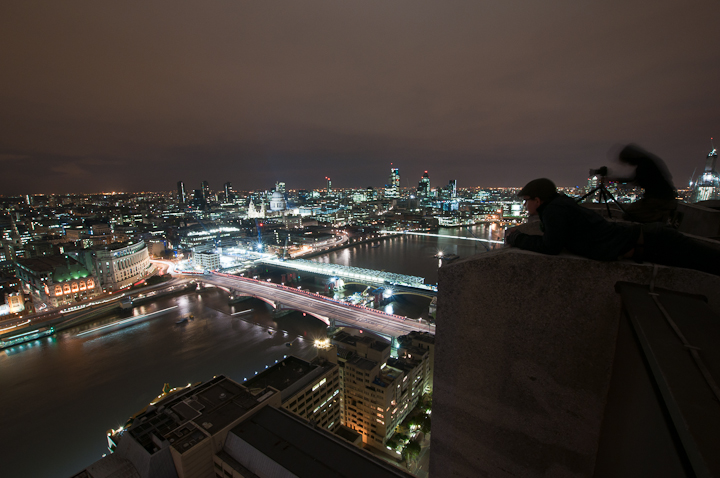
I stepped outside onto a lovely roof. Not the highest I have ever done by any means but it had two sketchy water towers on it to get up on more floor (though you had to lay on their sloped roofs rather awkwardly to get shots!). There were also multiple levels connected by rusty ladders which I enjoyed walking up with no hands. I spent the rest of the night laying around staring at a beautiful skyline shrouded in moonlight and soft city glow.

Water Tower Tipsy

Peep show

Nights like these


London’s Olympic Waterscape

5 02 2010

London/Water (photo by Amy Cutler)

I haven’t been out exploring for some time. My energies as of late have been devoted to writing my thesis, preparing my students for a field class in New York City in March and getting ready to begin filming our Creative Campus Initiative project London’s Olympic Waterscapes. London is set to host the 2012 Olympic games and we have been generously funded to create a June exhibit about what this means for the city’s waterways. Wicked.

Well, I am happy to report that my students are off and running with their project proposals and that we have finally started filming for the Olympics project! It started last Sunday, rather unexpectedly, when William Raban, Director of Thames Film (1986) texted me in response to my inquiry letter and asked me to come along for an interview during the final day of his exhibit in East London. Amy Cutler and I went out and had a fantastic morning chatting with one of the legends of London filmmaking who showed us rushes from his new film and told us about the similarities he sees today with when he made Thames Film, just before Margaret Thatcher tore into the city.

William Raban

William Raban on the 21st floor of Balfour Tower over East London (photo by Amy Cutler)

The fun continued today with an interview at the Olympic site with Rob McCarthy, the Olympic area coordinator for the UK Environment Agency. Rob spoke to me, Terri Moreau and Michael Anton about how he has been working in the area for 30 years and how the Olympics has money pouring into the area causing unprecedented changes to the waterways. Rob was fantastic, fielding the interview in between trains, moving locations multiple times and in the end, driving us around to the Olympic Stadium to get some footage of the construction.

Rob McCarthy teaches us a thing or two (photo by Terri Moreau)

Monday we are scheduled to sit down with Iain Sinclair, one of the literary giants of our age and an unabashed critic of the Olympic development. In the meantime, rest-assured, an exploration is planned for Sunday so you can see more pictures of decaying, decrepit and disused dreadfulness. In the meantime, imagine this as a ruin in 2013:

2013


Going Pro Hobo: European UrbEx Road Trip

10 12 2009

4 explorers, 5 Countries, 2000 miles, 16 abandoned sites, 5000 photographs, 3 hours of video footage, a pocket full of loose change to live on and a car full of $7000 worth of camera gear. It’s these last two bits that I find so amusing, these are the pieces of the puzzle that turn this from a hobo trip to a pro hobo trip I suppose. That and the radical mobility of our opt-in faux homelessness.

After our last trip to Europe, I wrote about urban camping. I felt like that long weekend away was a sort of like a wilderness retreat, a little escape from work and obligations to see something unstraited. Some people choose go to a pine forest for these retreats, we go to abandoned chateaus in Belgium. Seems fair enough.

But this trip was different right from the beginning. Part of it was due to the length of our expedition, part of it due to the dynamics of the crew. We had a crew of 4 – myself, Statler, Winch and Silent Motion, all up for it in a big way. We were long inspired by the perpetual homeless adventures of Dsankt at Sleepy City which seemed to pry open a new level of UrbEx or, at the least, open up new possibilities for adventurous play. So we struck out on a Sunday night from Reading, UK, across the channel on the P&O car ferry, through the sadness of Calais, France, just across the border into Belgium to Kosmos, a hotel with a weird Russian art-deco theme that had closed in 1996 where we planned to stay the night.

Transgressive Mobilities

What a shithole

Tourism?

Getting into it

Rated 1 Star on Travelocity

Strangely enough, given what a pile of crap this place was, it was really hard to get into. Finally, after making our way in, ferrying in bags of clothes, food, whiskey and 8 bottles of Chimay looted from a road side stop, we settled in for the night, with a gorgeous view of a random Belgian valley spread out before us, full P&O shot glasses of cheap drink and a horrible rattling noise from the winds assaulting some loose flap on the roof above us.

Not broken yet

Penthouse

Winch

Winch taking in the epicness

Unstrap

The Goblinmerchant gets naked

We ended up finally dragging tables and chairs from other rooms to board up the windows which were allowing massive gust of wind and rain into our sleeping quarters. Essentially, we started doing home repairs. That night, falling asleep to Aphex Twin’s Selected Ambient Works Volume II playing softly on my phone, I had dreams about the property owner showing up weeks later to find that somebody had actually repaired their building, boarded up windows, brought in and cleaned up couches, filled the bookshelves with tea lights. I imagined them being, at first, dismayed and confused and then… amused, a small smile cracking their stoically disappointed Belgian head.

The thing I started thinking was that our move from UrbEx into pro hoboness was actually a move that benefited property owners because, as Silent Motion put it, “our sleeping in the space builds a more intimate connection with it, we become a part of the fabric.” So going pro hobo, in my mind, even the documentation aspect that you are scrolling through right now, is about place hacking, about finding intimacy in a world full of sterile engagement.

This idea was made even more funny when the property owners showed up at 8am the next morning and started putting up more fencing on the site. Between us and them, the place was going to be completely remodeled soon. We waiting 30 minutes or so for them to leave and made our hasty escape.

Although I am tempted to write about all 16 sites we went to, I can’t. The reason for this is, quite simply, that I cannot relay the epic nature of the experience to you in a blog posting, try as I might. With every day that passed, the crew got more raw, more volatile, more energetic, in a weird, confused sort of way. It was a delirious panic that I think would have even made Dionysus proud. I was drunk for most of it, partly because I do better fieldwork after a few beers and partly because the experience was so raw that it had to be shielded, it was like trying to stare into the sun. Now I know why so many homeless people drink.

Staring at the sun

Hallway

The raw light of experience

Boundaries that existed in our little UK bubble began to break down. We did not speak the language, we did not meet a single person outside of the grocery stores and petrol stations we ravaged, washing our hair in their bathroom sinks and leaving piles of trash in their parking spaces, running under the turnstiles at the restrooms that demanded 50 cents. All that existed, all that mattered was the adventure and the bond between us which grew tighter with every sip of Jupiler in the back seat of Statler’s car, with every step walked over squishy mold/carpet. We could not think about what was happening because as Dostoevsky points out “one must love life before loving it’s meaning.” And this love was on fire. We began infiltrating live sites, barbecuing dinner in wheelbarrows, lighting dozens of candles in random rooms of Nazi extermination camps and free climbing timber into bell towers in crumbling buildings to photograph the holes in the roof veiled in cloudy continental morning mist.

The films here were shit

Dinner sorted

Dinner cooked over pieces of the gas chamber

Europro

Do they know we're in here?

Winch was the primary conspirator of this little frozen-toed expedition. Always up for a challenge and a laugh, he had booked this absurd holiday in December, I think, to break our will. After all, only the broken can be admitted into the ranks of legend. After taking in a few leisure sites over the first few days, he hits us with the news – we are going after heavy industry. Now, given that I am about to give a paper on reanimating industrial spaces through urban exploration at the 2009 Theoretical Archaeology Group conference in Durham at the end of the month, I thought this is a grand idea. Until it actually started going down.

We walked up to Transfo, a power station in Belgium, to find it swarming with people. We waited until dusk. When we thought everybody had gone home, Silent Motion ninja’d his way in to the secure building past the motion sensing lights and infrared alarm system. We got in and snapped some pics for about 10 minutes before some worker ran up and started rattling the doors to the heavy equipment room. Whoops. Turns out they were not all gone, but Silent Motion clearly could give a shit and starting climbing the infrastructure of the building to get a landscape shot.

Roll me

Raw Metal

Pushing it

Ghosts of industry

On our way to Germany, we stopped to infiltrate Kokerei Zollverein, again swarming with people including professional photographers and men in suits. I swore that this infiltration would end badly. The only bad outcome, in reality, was my nausea from being meters away from workers as we snook past them and hid in the shadows. All my photos from there are shaky save two:

Up top

Fear processing factory

Pause

Pulled

After my moment of existential crisis, we made our way to an abandoned train yard Munster Gare, a glorious moment for me for some odd reason. Something about the intersections of transportation (mobility), dereliction (history, aesthetics) and remote location (opportunity for playfulness) made this my favorite site of the trip.

Titanic

I'm the captain of this ship!

moving?

The passengers

Woody

No more goods

Broken

Unnecessary

After my locomotive jizfest, we drove into Germany. I had not been since I was 19 years old when I pursued the country on a underage American-in-Europe beer run, and was dismayed to find that it was actually a really beautiful place. Mostly because the further East you go, the more derelict structures begin to dominate to landscape. I always thought of dereliction being about the failures of capitalism, but nowhere was abandonment more apparent that in East Germany, markers to the collapse of communism and the retreat of the Soviet Union. The group entered a fervor as we drove through the country side, everything began to look derelict. At one point I remember Silent Motion saying, “Hey there’s a building over there!” and Winch responding “Nice, does it has trees growing out of it?”

We had resigned ourselves to a week of squatting. It was safe to say, at this point, that we had all left our lives behind. I didn’t care about my research anymore, I just wanted to keep getting high on adrenaline. No one ever talked about their jobs, their families. We talked about girls, 4chan, about what country had the best beer (hint: it’s Belgium), about football. Even our Blackberries and iPhones served only to get us aerial photos and to update our facebook status so everyone knew how much more fun we were having than them being homeless, elite and stacked with fat kit. As we crept into East Germany, we were all broken.

I don’t mean that in a bad way. What had been broken was our expectations, our existential dilemmas, our need for unnecessary daily crisis. These things were overwhelmed by the experience of the present, by what was just around the horizon. I felt, for the first time on this project, like I had actually broken the research barrier. I was not studying UrbEx anymore, I was UrbEx. I sat in the back of the car, delirious and drunk, and saw Winch staring at his fingernails. He says “When you look at my fingernails what do you see?” I told him “Maybe the blood and sweat of old inhabitants.” He considered it and replied “I don’t want to clean them…” This was our arrival, the point at which we had committed to dreaming instead of sleeping. And with that, we moved into Berlin, into Ex-Soviet Territory. But that, my friends, is a story for another day.

Lucid

Never done


Au Revoire to Marc: The Dragon of Clapham

7 11 2009

So we’ll go no more a-roving
So late into the night,
Though the heart still be as loving,
And the moon still be as bright.

For the sword outwears its sheath,
And the soul outwears the breast,
And the heart must pause to breathe,
And love itself have rest.

Though the night was made for loving,
And the day returns too soon,
Yet we’ll go no more a-roving
By the light of the moon.

—   Lord Byron

DSC_4238

Innocent Stroll?

By the light of the moon, Marc and Hydra walked through the common, stopping every once and a while to blow something up. It was a quiet wintry night, a night for explorations of the soul before landscape, a post-phenomenological spectacle of Autumn ritual thought adornment. And then, the unthinkable happened. One explosion, set off by the Marc in a hysterical frenzy over his departure from the land of the mystics, shook the ground with a terrible rumble.

The grass of the common began separating, the earth seizing and shaking like a new born baby addicted to crack; trees capsized into an emerging crevice that revealed a hidden underground storage facility, untouched for 42.75 years, filled with the records of the lost souls dragged down to Dante’s 7th circle of hell.

Unexpected

An exposed vein

Where does this go?

Something new

Boxed memories?

Records of the Lotus War (Photo by LutEx)

A decision was made to explore this emerging subterranean wonder. Hydra, designated lead explorer on this spontaneously scurrilous expedition, entered the metal-lined den with trepidation; there was evidence of habitation, or at least adaptive reuse. The mole people had been here, burrowing into the earth, connecting the tunnel with another inhabited by a perpetually sleeping dragon that shook the tunnel with his deep exhalations.

The mole people were encountered soon after, mining away at the sidewalls of the tunnel, inviting collapse, but also inquiry, undertaken carefully by Marc who spoke conversational Molish. LutEx, master and commander of the underground, resided there with his Queen it seemed. They join the expedition for the promise of chocolate éclairs. Earlier that night, he tells Marc later, he mined a Jewel, and Diamond from the depths. The Diamond, as she then became known, joined the expedition on the promise of existential freedom.

As they move through the tunnels, LutEx explains that there was indeed a sleeping Dragon at the end of the tunnel, and that the mole people has constructed a wall between them and the beast to keep it’s steaming slumbering sighs from singing their eyebrows. It turned out they were not trying to dig to the Dragon, but to avoid it while working their way through the 7th circle. As Hydra commented on the quality of the construction, suddenly, running steps are heard.

Hazard?

Experiential barrier

The Goblinmerchant, vendor of the mystical, last seen at the Pyestock Stargate, emerges from the depths at breakneck speed, smashing through the wall in a brave but foolish attempt to challenge the Dragon. Little did he know, the Dragon had a guard. The Goblimerchant is caught in a time-space compression web, cast by a magical troll hidden in a subterranean enclave, forcing him back into the 7th circle, restoring the barrier the mole people had constructed, a barrier, which, it seems, the Dragon allowed to exist.

For his transgressions, the group sees the Goblinmerchant subjected to endless torture, first by having his hair pulled from the follicles by a diabolical goblin-engineered torture machine, and then tied by his feet and hung from the roof of the bunker, on show until the end of time for other daring explorers, an example of the dangers of crossing the Great Dragon of Clapham.

Caught

Torture and Punish

Born and died

Sisyphustic dilemma

With the expedition now complete, with lessons learned, The Diamond is indeed given her freedom, teleported back to the surface by a goblin transporter restored by the mole people to beam in food supplies and port.

And beaming

Beamed

As for Hydra and Marc… Last was heard they had joined LutEx and his Queen in the underworld, digging into the 8th circle of hell.


Real Life Role Playing Game (RLRPG)

19 10 2009
Is this a game?

Is this a game?

Anthropologists have recently been writing about World of Warcraft, Second Life and other Massively Multiplayer Role Playing Games (MMORPGs). Since many of these games have millions of players, with their own economies, cultures etc., it has been suggested that people within virtual worlds have developed their own culture. As an avid World of Warcraft player, I heartily agree. But I also love playing games in real life, and, in a sense, this is what UrbEx is all about.

Yesterday Marc took me to a site which felt very much life a game, a surreal landscape of industrial waste, technological failure and a ninja Ghurka security guard. We explored it, very carefully, and all went well, but when I got home, I re-dreamed the explore, making it the game I knew it was.

I call the result a Real Life Role Playing Game or RLRPG.

In a small forest, in a quiet neighborhood, there are trails snaking their way through the tress. Different paths straddle the border between the forest and fields, inhabited by Mums with prams on this lazy Sunday, and by pairs of flatmates and friends, jogging, trying to sweat out remnants of last night’s snakebite extravaganza with girls in too-short-skirts. On one of these trails, in a black hooded cloak, walks Marc of the Cata Clan, Lvl 80 Elite Explorer, back again to conquer Pyestock for bonus explorer points before returning to his subterranean home in the Paris Catacombs.

Marc moves to the perimeter of his target, taking note of the Ghurka guard walking along side him, without looking in his direction, noticing that the Ghurka is following his movements. And eyes. He has been spotted. Marc breaks into a run, trees passing by like cars on a busy highway. With a quick glance to the side, he notices the guard is keeping pace. An elite guard. Merde.

Rookinella was right to be scared and stay home today, this guard cannot be defeated with felt or plastic pirate swords. With two glancing kicks off of the leaf cover, Marc is running up a willow tree, rebounding over the 4 meter triple barbed wire fence, his cloak hood flapping in the wind, distracting the Ghurka just long enough to pull the small blade from his leg holster. The Ghurka is cut down before he can get to his weapon, his mouth held from behind to muffle the screams of agony as he bleeds out.

Moving in

Moving in

Marc shoulders the guard (got he’s heavy for such a little man!) and sneaks stealthily into the entry point, the Stargate chapel, where his next surprise awaits. He stuffs the guard under the mesh catwalk and walks over to a large circular disk on one end of the room. With a deep breath, he grabs the edge of the Stargate and pulls it open to unleash the Goblinmerchant, a daemon; a vendor of all things fantastic and mystical.


But what’s this? The Goblinmerchant smells humans. Turning his comrade, he can see that Marc has heard them long before now. A group of 4, fumbling their way through. No wonder, with security gone now. The perimeter is being breached. If they make their way to the Stargate, all hell could break loose.

They run off, low to the ground, weighted down by field equipment and supplies pulled from the Stargate, supplied for documentation of the Cata Clan invasion. Through the dangling Cat 5 cables, past the air tunnel control room, up the rusty ladder. Four fellow explorers lie in ambush and a battle almost ensues until we realize they also hold a key to the Stargate.

The documentation begins, one room after another, small items and large machines from humanities forgotten industrial past, a legacy of materiality replaced by computer models and office jobs in Slough.

Controlling the minds of workers?

Controlling the minds of workers?

An exploded reactor, lucky we were there to prevent radiation leakage!

An exploded reactor, lucky we were there to prevent radiation leakage!

Mail delivery system

Mail delivery system

Heard the seashore in these

Heard the seashore in these

Tunnels or cables? Was I in those?

Tunnels or cables? Was I in those?

Flying over the site with a temporary upgrade

Flying over the site with a temporary upgrade

Don't look down

Don't look down

Dirty row, collected for XP

Dirty row, collected for XP

Goblinmerchant calls control to tell them the mission has been accomplished. He is awarded 3 mana potions and 5000XP points.

Phone home

Phone home

Documentation complete, Marc enters the energy capacitor, a small proton particle subfield generator, and Goblinmerchant flips the switch, firing him back to Subterranean Paris.

Impossible

Unstoppable


Psychogeography

19 10 2009

I was recently contacted by Emma James, a researcher at Newcastle University studying the recent re-emergence of psychogeography. The following is a short interview I did with her.

SI

SI graffiti in Amsterdam

_________________________________________________________________________________

Emma James: How / where did you first hear about the concept ‘psychogeography’?

Bradley L. Garrett – The first time I heard the term psychogeography was on the cover of a book by Merlin Coverley in the London Review Bookshop, I think I read half of it standing in the store! It was a good introduction and branched me into the work of academics working with the concept like David Pinder and Alastair Bonnett, then deeper into the Lettrist Movement, Raoul Vaneigem, Guy Debord and ‘work’ of the Situationist International (SI).

E.J. – In various articles I have read, people have observed that there has been a recent re-emergence of psychogeography in the last decade.  From your research have you found this to be true?

B.L.G. – I absolutely see a renewed interest in psychogeography. There are numerous clubs on the internet devoted to the practice and the mass-market work of Ian Sinclair and Patrick Keiller in particular really make me feel like psychogeography has ‘gone mainstream’. A quick youtube search of the term reveals that many people are using psychogeographic techniques to navigate city space in new and interesting ways all the time, such as walking the city using algorithms, applying random models to a (supposedly) fixed template, replacing one arbitrary motivation (I am walking to work) with another one (I am walking 4 streets North, 2 streets East and 1 street North until I can’t walk anymore).

E.J. – ‘Who’ do you understand to be modern practicing psychogeographers (e.g. artists, geographers, everyday civilians’ etc)?

B.L.G. – I see geographers are the preeminent drivers behind the modern psychogeographic movement, primarily because their inspiration has come from reading the work of the situationists who pioneered the concept, the problem is that a lot of them write about it without ever practicing it, which I see as a failing. But there popular writers such as Ian Sinclair and Will Self who are quite aware of the lineage and practice the techniques also produce work is much more widely read, so they might be considered the primary ‘practitioners’. But, of course, we also find a lot of artists, counter-cartographers and people on the street using these techniques, even if they are not (wholly) aware of the theory behind the practice.

The other thing I find interesting is that this ‘new’ psychogeographic movement appears to be centred primarily in Britain (and especially London), which implies to me that it may be reactionary – perhaps due to the increase in government control and surveillance that has taken place over the last 10 years, making people feel a greater need to defy order, even in small ways such as walking across a piece of grass signposted not to or speaking through a bullhorn for a day. The time and space in which this resurgence is taking place sure feels a lot to me (from my readings) like the governmental regulations and reactions that led to the founding of the SI, and ultimately to the French Wildcat revolts of 1968.

So I would say that although psychogeographers tend to invoke small actions, it would behove both academics and governments to pay attention, as these small resistances may be an indication of a larger social consciousness of boredom, restlessness or downright anger. People using psychogeographic practices are just one of the groups who dare to push back a little sooner than others.

E.J. – I understand that you are studying ‘urban explorers’.  How would you view them in relation to psychogeography (e.g. as a branch of psychogeographers?  Or just another term to use for practicing psychogeographers?)

B.L.G. – In my discussions with urban explorers, most would not want to be labeled as psychogeographers, though there are some clear similarities in their practices; both are instances of what I might call mobilities of transgression or, maybe more specifically, place hacking. Both psychogeographers and urban explorers seek to redefine and/or experience space and place on their own terms, regardless of pre-existing rules, social templates or cultural norms.

E.J. – As part of my dissertation question, I am interested in people’s motivations behind practicing psychogeography.  According to various writers there are a few different ideas, e.g. political motivations/an interest to connect with the past/as a sort of rebellion against modern consumerism e.t.c.  From your research and interaction with urban explorers, what have you found their motivations behind practicing it to be?

B.L.G. – I think that most people would find that they have a range of motivations behind anything they do that requires some effort, there is rarely just one driving force behind action, especially when that action is activistic, dangerous or trangressive. There is an investment/reward ratio at work where you think to yourself “okay, yes, I could climb that crane and get some photographs, but is the experience, or the photograph I bring home, worth the possibility of arrest?”

Most urban explorers would I think contend that they are interested in the historic background these places, though one person did tell me that they “could give a shit about the history, I just like to explore.” I have heard the suggestion that urban exploration is about bearing witness to the failure of capitalism, especially in seeing sites such as industrial ruins folding back into the landscape after their abandonment. I don’t think this is true at all. To be honest, most urban explorers are in these places to get photographs that most people do not have; to see something that no one else has seen. So it is both the experience and the production/acquisition (which is of course part of the capitalist system they are supposedly subverting) that becomes the motivation.

I would say that people who define themselves as psychogeographers are much more likely to have political motivations than people who define themselves as urban explorers, though the practices are intertwined.

E.J. – As a geographer, I have noticed that there is very little writing on psychogeography within the discipline, though I have come across a few lecturers who have tried to introduce it within the course.  Would you say that there is a valid place for psychogeography within the discipline of geography, and should it perhaps be promoted/expanded?

B.L.G. – I think that geography has a lot to learn from psychogeography, both in terms of its historical roots and trajectory and in terms of modern practice. It certainly seems like there is some resistance to the concept, great publications like Alistair Bonnett’s journal Transgressions came and went, snuffed out, I think by academia’s inability to challenge theory with practice, or maybe more fairly, academia’s inability to ground theory in practice. A similar stigma exists against participatory geographies, I think, for the same reason – essentially many academics are afraid of becoming activists, afraid of getting their hands dirty, afraid of testing an armchair theories, afraid of failure. I believe, as I think many psychogeographers would, that we should celebrate failure. We would like to think that academia is a haven for free thinking, but the Ivory Tower also has its social and cultural models.

E.J. – What is your opinion on the argument that psychogeography could be applied as a new way of re-writing and representing the city (e.g. the idea of psychogeography maps alongside ‘mainstream’ mapping)?

B.L.G. – I think that this is a wonderful idea, the thing is that psychogeography, and psychogeographers, tend to not want to be boxed in. This poses difficulties when, for instance, writing grant proposals for projects. If you were to suggest to a funding body that you were going to spend a year following the ‘densest’ flows of people off of the London Tube to try and psychogeographically map nodes of interest at different times of day in the city (as I have done for fun!) you would find this funding body likely feeling that the research has no ‘research question’ or ‘direction’. The fact of the matter is that it does have a direction, it’s just that you have taken that power of direction out of the hands of the ‘elite’ academic and put it into the hands of the anonymous city dweller. I think that there is something profound in that. That is where, I would argue, the real solid tendrils of politic challenge come from in psychogeography, not from the esoteric writing style or wandering corporeal experiences, but from having the openness to resist being the one who defines what those experiences should be.

Just as psychogeographers work to subvert political, social and cultural templates, they also, I think, would be reluctant to create those templates, making playing the dual role of being both an academic and a practicing psychogeographer a rare one.  Would we benefit from melding those illusory dichotomous positions? Absolutely.


The Primacy of Presence

14 10 2009

It’s only been two days since I have returned from Belgium and I am already fiending for my next explore. I know it’s just around the corner, I have a few invites to go places this weekend, but in the meantime, I am stuck here behind my computer writing grant applications and trying to catch up on my field notes, taking short breaks to look at pictures like this one:

Somebody's house, nobody's home

Somebody's house, nobody's home

This was a stately home that Vanishing Days took me and Marc to a few weeks ago where we all shared some angsty moments in a beautiful hallway with a spiral staircase, a dome-shaped skylight and some very large mirrors.

Space Invaders

Space Invaders

The thing about this house, and the reason, I think, why I keep going back to look at the photo, is that it was clearly not abandoned very long ago (I heard 1998 – so maybe 11 years). Generally, I find that the more recently a place was abandoned, the more intersting it it to explore, because it has some sort of presence. You can feel who was there. At times, you can feel thier grief and loss. Sometimes, it seems even more visible, some small piece of crumbling failure, a left behind artefact or scrawled note. Maybe it is the line between UrbEx and Infiltration and my need to get closer to that line is becoming greater as I have to feed that addiction.

Forgotten pet

Forgotten pet

Vanishing Days, Marc and I saw this bird trapped between door frames and shutters, to panicked to get out, not intelligent enough not to get in in the first place. We saved it, but quickly realized that there were piles of dead ones behind the windows. We were forced to accept that this was their fate, just like the house, now no one’s home, which would die a slow death. But for a day, the house was enjoyed, playful desires were realized, new shoots of life were located, and space became place. As I stare at the picture of this beautiful abode, I like to think that it appreciated our visit.

Spun

Spun

Silk

Silk